Abstract
Purpose – The purpose of this study is to assess the significance of employee work flexibility and the policy of the organization for survival during any crisis. This study also investigates the moderating role of leadership support (LS) during such turbulent conditions. Design/methodology/approach – This study has used literature from the fields of organization performance, human resources and organization policy (OP), along with the theories of resource-based view (RBV) and dynamic capability view (DCV) to develop a conceptual model. Later, the conceptual model is validated using the structural equation modeling technique. The study used a survey method with a sample of 311 participants. These participants are employed as human resource managers (HRM) and other supportive workforce at different levels in the organizations. Findings – The study shows that innovativeness and employee flexibility (EFL) are critical toward organizations’ survival during any crisis. Also, the study highlights the importance of OP and LS for the survival of organizations during and after any turbulent condition. Research limitations/implications – This study provides valuable inputs to the leadership teams of organizations, especially HRM. This research also provides food for thought for policymakers and researchers in the field of organizational performance. This study also contributes to the overall body of literature on organization analysis and extends the literature on RBV and DCV. Originality/value – The study adds value to the overall body of literature on organization performance and capabilities along with human resource management. Few studies have nurtured issues on EFL during turbulent conditions. Also, there are limited studies in the areas of OP such as favorable and unfavorable
policies toward employees. Thus, this study can be considered unique. Moreover, the study investigates the moderating role of LS which adds value toward the body of literature on organizational leadership capability.
Keywords Innovation, Turbulence condition, Organization policy, Flexibility, Leadership support
1. Introduction
During a macrolevel turbulent environment (STE), organizations face various challenges to survive. In this situation, it is necessary to establish a nexus between the macrolevel STE and worker experience (Cooke, 2018). Turbulence can be referred to as political, economic or even social crises that could affect the world of work (Psychogios and Prouska, 2019). The term “worker,” used in this study, includes both traditional and casual workers (Cañibano, 2019). Traditional workers are on a regular payroll and are permanent employees, whereas casual workers are recruited temporarily to address the additional workload in an apocalyptic situation. In this study, our intention is to investigate how employee flexibility (EFL) could help organizations survive during turbulent conditions. It is an example of socio-economic turbulence.
This new health threat is reported to have impacted on employment, workers, as well as organizations, throughout the world. The COVID-19 outbreak has severely affected the normal growth of organizations and has tipped many countries into recession (Azevêdo, 2020). For organizations to survive turbulent conditions, they need to depend on employees’ innovativeness and flexibility to stay operationally active (Bettiol et al., 2022; Ilyas and Osiyevskyy, 2022). In the context of multinational companies’ (MNCs) survival during turbulent conditions, human resource managers (HRMs) shoulder greater responsibilities to improve workers’ flexibility, so that they can work unhindered in different time zones and in various workplaces (Kaufman, 2015). During the pandemic, when affected countries had been thoroughly locked down and governments had to set stringent requirements for organizations in several industries to mandate social distancing, the HRMs were trying hard to expand EFL to address the situation (Ketkar and Sett, 2010; Baker et al., 2020; del Rio- Chanona et al., 2020; Siachou et al., 2022). This crisis has impacted on organizations’ functioning, as they had to restructure, downsize, alter work time arrangements along with workplace flexibility (WPF) and execute pay-freezes or reduce incentives (Halinski and Duxbury, 2019). To address the situation, HRMs have needed to focus on exploiting the capacity of EFL and strategic resources, and to change the existing organizational pattern and upgrade the organizational structure (Muellbaur, 2020; Chatterjee, 2021; Vrontis et al., 2022).
Prouska and Psychogios (2018, 2019) have shown how HR practices could be changed during any STE to ensure best business value. But no studies have thoroughly investigated how a nexus could be established between a turbulent condition and worker experience so that the organizations can survive. Thus, studies have observed that organizations need to restructure worktime arrangements and WPF by appropriately exploiting EFL and their strategic resources to stay operationally active during turbulent conditions (Halinski and Duxbury, 2019; Muellbaur, 2020). Turbulent conditions could include political, economic, social and other crises. But these studies took place in a fragmented manner at different times. There are scant studies that have investigated explicitly what the salient factors are which could impact EFL for addressing turbulent conditions, how organizational policies should be updated in response and what the role of organizational leadership is in supporting employees to help their organization survive in a STE. To fill this gap, the aim of this study is to address the following objectives:
to identify the factors impacting EFL to address any turbulent conditions for the survival of the organizations;
to investigate how effective policy of the organizations could help the employees to be more flexible to address any turbulent conditions; and
to assess how leadership ability could impact on the competencies of the employees to appropriately support the organizations to survive during any crisis.
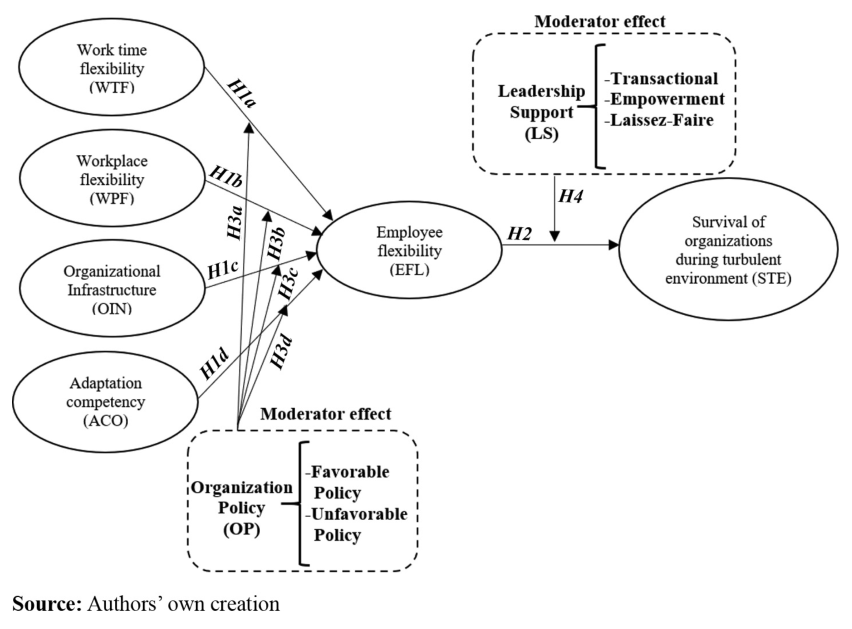
This study has demonstrated that worktime and WPF, plus organizational infrastructure (OIN) with employees who have the appropriate competency to adapt, duly supported by robust and executable organizational policy (OP), could improve EFL, thus, helping organizations to survive any crisis, provided the employees get adequate support from the organizational leadership team.
2. Literature review
Wright and Snell (1998) argued that the main characteristics of a flexible workforce are associated with the willingness of the employees to smoothly carry out a wide range of tasks. By expanding EFL, organizations can address the dynamic turbulent conditions (Teece et al., 1997; Teece, 2007; Amirkhanpour and Vrontis, 2013) also emphasized the necessity of EFL during a STE to accomplish an organization’s tasks. An organization’s strategy for using their workers in the best possible way to address any STE helps an organization to survive (Ketkar and Sett, 2010). The concept of survival in business refers to keeping the business operationally active for a specific period, especially in turbulent conditions. At the time of the COVID-19 pandemic, affected countries promulgated lockdowns and governments decreed mandatory requirements of maintaining social distancing to keep the outbreak in check. To survive, organizations, especially MNCs, needed their employees to work in a flexible manner from anywhere and at any time and to shoulder greater responsibilities to keep the organizations functioning in such an unprecedented situation (Azevedo, 2020; Sheshadri, 2020; Baker et al., 2020). Organizations had to expand EFL so that employees would feel comfortable working in any time zone and in any place to address turbulence (Zagelmeyer and Gollan, 2012; Chatterjee et al., 2021a, 2021b; González et al., 2022).
During turbulent conditions like the COVID-19 pandemic, the employees of MNCs working in different time zones have to assume greater responsibilities and adjust to different cultural aspects and customs at various subsidiaries located around the world (Kaufman, 2015; Piekkari and Westney, 2017; Chatterjee, 2020; Khorana and Kizgin, 2022; Chaudhuri et al., 2023). Moreover, organizations need to articulate appropriate and executable policies so that they do not encounter any constraint to function in turbulent conditions (del Rio-Chanona et al., 2020). The policies must include what options are available to the employees who work in different time zones or in other places during crises (Palumbo, 2020).
Employees need to perform different tasks in diverse situations, but it is important to reduce the time and costs needed to perform the tasks (Van den Berg and Van der Velde, 2005). EFL facilitates employees to undertake greater responsibility to multitask (Riley and Lockwood, 1997). Employees are said to be flexible when they recognize what future skills will be required and learn new approaches to perform their jobs in the new context (Pulakos et al., 2000; Dyer and Ericksen, 2006). It has been observed in a study that organizations need to react and respond to different turbulent conditions accordingly by articulating appropriate and effective policy to address institutional obligations by improving EFL (Greenwood and Hinings, 1996; Bhattacharya and Wright, 2005). The policy needs to include
options for employees to adopt to keep the operations going in any unforeseen situation (Palumbo, 2020; Sheshadri, 2020; Chaudhuri et al., 2022a).
In the STE, stock markets have been impacted dramatically when economists predicted stiff economic recessions (Baldwin and Weder di Mauro, 2020; McKibbin and Fernando, 2020). During the pandemic, households’ buying power and consumption levels were severely affected (Muellbauer, 2020). Organizations faced many constraints to survive (Cooke, 2018), but their employees played a significant role in that their work had an important impact. Therefore, EFL is vital in a macrolevel turbulent condition, and it is said to be quasi-synonymous to employability (Ketkar and Sett, 2010; Chebbi et al., 2015; Arfaoui et al., 2019; Chatterjee et al., 2022; la Gala-Velásquez et al., 2023). Also, leadership support (LS) is known to have a positive influence on EFL, which helps organizations to survive in a crisis (Müller and Turner, 2010).
To address environmental turbulence, organizations must rearrange their infrastructure by improving the competencies of the employees and developing their flexibility so that in turbulent conditions they can more easily work from anywhere and at any time (Jena and Memon, 2018; Dimitropoulos et al., 2020; Sheshadri, 2019; Cañibano, 2019; Campanella et al., 2020). Organizations should also redistribute the necessary resources through an adaptable OIN (Becker and Huselid, 2006; Belyaeva et al., 2020; Sheshadri, 2021). Thus, the extant literature has nurtured how organizations could survive during a crisis by redistributing resources (Belyaeva et al., 2020), by improving employees’ efficiency and productivity (Cañibano, 2019), and by enhancing their flexibility to address any crisis (Muellbauer, 2020). But the literature is found silent on how improving employees’ flexibility, duly reinforced by OP backed by active LS, could affect organizations’ ability to survive crises. This perspective of the present study is an attempt to bridge such a void in the extant literature.
3. Theoretical background and development of a conceptual model
3.1 Theoretical background
In focusing on the dynamic abilities of HR managers to handle any STE like the COVID-19 pandemic, this study has analyzed the issues in the context of resource-based view (RBV) (Barney, 1991) and dynamic capability view (DCV) (Helfat and Peteraf, 2009). These theories emphasize organizations’ abilities and resources as fundamental factors for survival in any unforeseen event.
RBV is considered a managerial framework for identifying an organization’s strategic resources to be exploited for achieving success under any constraint. This theory emphasizes that HR managers pay attention to their organizations’ internal resources, which are primarily the employees. Organizations should identify the capabilities and competencies of their employees to effectively mobilize and use this resource (Amirkhanpour and Vrontis, 2013; Palumbo, 2020), especially during an unexpected crisis like the COVID-19 pandemic and other turbulent conditions.
However, employees’ capabilities to devise strategies to deal with diverse, dynamic market demands during a crisis may be characterized by high uncertainty. Therefore, EFL would help organizations confront situations caused by any turbulent conditions. The organizations must have a flexible crisis management policy so that in dynamic, turbulent conditions, employees can work at any time from any place using different devices and infrastructure provided by their organizations. OP should be commensurate to any unforeseen and unprecedented crisis. This concept is in conformity with DCV theory. DCV has been referred to as the new touchstone in the field of strategic management (Vogel and Güttel, 2013). Dynamic capability (DC) is explained as “the firm’s ability to integrate, build and reconfigure internal and external competencies to address rapidly changing
environment” (Teece et al., 1997, p. 516). It builds organizations’ abilities to exploit new resources and to revive existing abilities (Agbim and Idris, 2015).
While RBV emphasizes acknowledging value in existing resources and selecting from them, DCV focuses on changes in the value, deployment and renewal of existing resources, as well as on the creation of new resources (Jurksiene and Pundziene, 2016). Hence, RBV is concerned with the decision phase while DCV has an impact on the execution phase (Wójcik, 2015). DCV argues that HR managers should formulate long-term plans to train employees to work in any unexpected and unwanted occurrence (Nijssen and Paauwe, 2012), because during a crisis, the environment undergoes rapid changes, which employees need to address so that the organizations can continue and sustain their business.
The recent crisis of the COVID-19 pandemic has completely changed the situation for organizations, and they have reacted by enhancing EFL to survive. This is in consonance with DCV theory (Helfat and Peteraf, 2009), which says that employees who are flexible are able to work at anytime and anywhere during a dynamic situation. By adjusting their infrastructure and adaptability, organizations can mobilize their most important resources, which are their employees. This concept has been supplemented by RBV theory (Barney, 1991). The RBV and DCV theories could help to synthesize the factors which might trigger EFL, thus, helping organizations survive in a most STE.
3.2 Formulation of hypotheses and assumption of the conceptual model
After reviewing the literature and theories, we identified the determinants that impact EFL. We shall next discuss each of these determinants. Finally, we shall discuss the moderating effects of OP and LS that our study considered.
3.2.1 Work time flexibility
People have always experienced industry-specific outrages due to natural disasters or weather events. But the crisis of the COVID-19 pandemic was a completely different event in shape as well as in sense. The outbreak of COVID-19 simultaneously affected industries throughout the world, causing unforeseen market disturbances on a massive scale. The pandemic impacted all types of organizations, including MNCs where employees work in different time zones (Beulen, 2012), to provide services to consumers in other countries (Piekkari and Westney, 2017). Organizations were forced to seek a new strategy to meet consumers’ needs of consumers by improving and widening EFL (Chaudhuri et al., 2022b). For example, during such turbulent conditions, when there is full lockdown and consumers still want to buy products, companies must have some strategy of using devices such as drones to deliver the goods. Workers must be comfortable to work at any time to help their organizations to quickly address changing environments. Hence, work–time flexibility needs to be improved (Parsley, 2020; Ranjan et al., 2023), which is expected to improve employees’ overall flexibility. These inputs prompt the following hypothesis:
H1a. Work time flexibility (WTF) of employees positively impacts overall EFL.
3.2.2 Workplace flexibility
Although the crisis of the COVID-19 pandemic was principally a human tragedy, we cannot ignore its economic impacts. Soon after the outbreak began, economic shockwaves were felt that severely affected global supply chains and consumer confidence, destabilized the travel and tourism industry, among others (Azevêdo, 2020). The shockwaves affected how organizations function, including MNCs whose HR managers were perplexed about what to do to survive. The turbulent condition during the COVID-19 pandemic compelled authorities to order lockdowns while organizations remained operationally active. Organizations needed to have provisions for their workers to function anywhere and the workers needed support from their organizations, which allowed them to
use company-owned technological devices and other infrastructure when they worked from home.
WPF can be conceptualized from either the employees’ perspective or from the organizational perspective. WPF is interpreted as “the ability of workers to make choices that influence when, where, and for how long they engage in work-related tasks” (Hill et al., 2008, p. 152). In the context of any turbulent conditions, organizations and employees consider the pros and cons of WPF (Hill et al., 2008). For example, workers can do their jobs elsewhere by taking their electronic gadgets with them (Halinski and Duxbury, 2019; Stich, 2020). Organizations must possess an appropriate plan or policy that allows people to work anywhere at any time so that they can appropriately react and respond to the dynamic environments prevailing during a crisis. This concept is in consonance with the idea of DCV (Teece et al., 1997). These inputs led us to formulate the following hypothesis:
H1b. WPF of organizations positively impacts EFL.
3.2.3 Organizational infrastructure
OIN comprises the systems, processes and protocols which provide support to the organizations and their key functions, and which embed organizations’ routine practices (Höse et al., 2023). OIN is important in that it is deemed to institutionalize the practices and procedures by providing rules that ensure they are consistently implemented even during any turbulent condition (Psychogios and Prouska, 2019). As an example, during the COVID-19 pandemic, organizations drastically changed their entire business functions. OIN is considered an important factor to address the crisis (Jallow et al., 2021), and it contains three salient components: business process, organizational designs and supporting technology (Dyer and Shafer, 1998; Höse et al., 2023). An organization must build its infrastructure to withstand a macrolevel turbulent condition without hindrance (Becker and Huselid, 2006). When an untoward situation occurs, organizations must redesign themselves to accept minimal standardization, flexible procedures and mutual adaptation (Mintzberg, 1992). Such an OIN provides employees with new experiences in a STE (Psychogios and Prouska, 2019). Employees who are flexible will be unconstrained to function in a changed OIN. Accordingly, it is hypothesized as follows:
H1c. OIN positively impacts EFL.
3.2.4 Adaptation competency
Employees’ adaptation competency (ACO) indicates that they can handle changes, juggle multiple demands, adapt to new conditions with fresh concepts and take an innovative approach. ACO helps employees to stay focused on the organizations’ goals while adjusting themselves according to any crisis (McKibbin and Fernando, 2020). This competency also includes employees’ ability to think critically, to be resilient, to have a mindset for growth, to collaborate and so on. This competency helps employees to become more productive (Kraus et al., 2020). The recent crisis of the COVID-19 pandemic not only affected peoples’ lives, but it also caused consequences to economies throughout the world, as economists predicted (Baldwin and Weder di Mauro, 2020; McKibbin and Fernando, 2020; Thrassou et al., 2022). The pandemic affected the business scenarios of organizations, and HR managers tried hard to enhance EFL by improving their adaptative competency (Vakola et al., 2007; Jordan et al., 2019) to face the adversity. Thus, going forward, HR managers need to effectively develop employees’ adaptive competency (Kraus et al., 2020; McKibbin and Fernando, 2020), which is perceived to enhance EFL. These inputs led us to formulate the following hypothesis:
H1d. ACO of employees positively impacts EFL.
3.2.5 Employee flexibility
Sánchez et al. (2007) considered flexibility to be a catchword for the employees of organizations. Clarke et al. (2004) said that flexibility is concerned with work outcomes. Golden et al. (2006) conceptualized it as productivity and commitment at work. Workers with an attitude to do a wide range of jobs is considered a quality that makes employees more flexible (Wright and Snell, 1998). The concept ideates the sense of a workforce that is functionally flexible and versatile, which is known as polyvalence. Polyvalence means the capability of workers to function in a diverse and dynamic situation. It helps organizations to mobilize their employees quickly, incurring less cost (Van den Berg and Van der Velde, 2005; Chatterjee et al., 2021a, 2021b).
Organizations must possess the sensing, seizing and reconfiguring abilities. In particular, they need to sense the best opportunities from the external sources and then seize them. Finally, the organizations must have the ability to integrate such opportunities with their valuable in-house resources to address a dynamic situation during a crisis (Teece, 2014; Wamba et al., 2020). This concept supports DCV (Teece et al., 1997). A flexible workforce means that HR managers do not need to recruit new employees to do new types of jobs, thus, helping the organizations survive in any macrolevel STE (Ketkar and Sett, 2009; Kraus et al., 2020; McKibbin and Fernando, 2020). Accordingly, it is hypothesized as follows:
H2. EFL positively influences the survival of organizations in a STE.
3.2.6 Moderating effects of organization policy and leadership support
Our study has used two moderators: OP and LS. OP impacts on the linkages of EFL with its predictors. LS acts on the linkage established between EFL and survival of organizations during a STE. Moderating variables are variables that impact a relationship by either altering the relationship strength or changing the direction of the relationship. We have considered the effects of OP by dividing it into two categories that are Strong OP and Weak OP. We have also considered the effects of LS by dividing it into two categories, i.e. Strong LS and Weak LS. OP is considered to play an important role when the environment is turbulent. An organization’s duty is not only to react and respond to the dynamics of business, but it must have a pragmatic policy for responding to institutional pressure to help employees become more flexible in a STE (Greenwood and Hinings, 1996). Organizations need to articulate this policy so that the employees know what their options are if they work in different time zones and if they can work from home or any other place using online platforms (Palumbo, 2020). The policy should afford employees with unhindered options to undertake effective training to assimilate their adaptability (Jain and Khurana, 2017), and it must be conducive to an organization’s effort to strategize and alter their existing information to face any untoward situation (Kraus et al., 2020; McKibbin and Fernando, 2020). The organizational management team must have crisis management policies in place that aim to guide their organization’s responses to crises, mitigate the impact on their reputation and enhance business sustainability before, during and after a crisis. The team must, therefore, define, plan and assess the most effective measures for this purpose (Jain and Khurana, 2017). These inputs have led us to hypothesize as follows:
H3a. OP acts as a moderator to impact the relationship between WTF and EFL.
H3b. OP acts as a moderator to impact the relationship between WPF and EFL.
H3c. OP acts as a moderator to impact the relationship between OIN and EFL.
H3d. OP acts as a moderator to impact the relationship between adaptable competency (ACO) and EFL.
In a macrolevel STE, LS plays a crucial role in strengthening the relationship between EFL and survival of their organizations. LS has three components: transitional leadership, associated with a hierarchical decision structure; empowerment leadership, associated with a participative decision structure; and laissez-faire leadership, associated with a specialized decision structure (Cohen et al., 1972; Turner and Muller, 2005; Van Knippenberg, 2013). Researchers have observed that LS influences EFL for an organization’s survival during macrolevel STEs (Müller and Turner, 2010). This concept helps us to hypothesize as follows:
H4. LS has significant moderating effects on the relationship between EFL and survival of organizations during a STE.
All these hypotheses lead to the development of a conceptual model, shown in Figure 1.
4. Research methodology
The survey method was used to test the research hypotheses. This method is deemed suitable for studies which aim to test hypotheses, describe a population, articulate the measurement scales and develop a research model (Lee and Shim, 2007). Now, to test the hypotheses and validate the model, partial least squares-structural equation modeling (PLS- SEM) technique has been used. This technique is useful for many reasons. It provides assumptions for relaxing the normal distribution, which is not done in covariance-based SEM. Besides, this technique helps to analyze a complex model without sample restriction (Khan et al., 2019). Also, with PLS-SEM, we obtain better results to analyze data from an
exploratory study like this one (Willaby et al., 2015; Hair et al., 2019). PLS-SEM is used to analyze responses to surveys by quantifying them using a definite scale. In this study, we have used a five-point Likert scale.
4.1 Measurement instruments
We prepared a questionnaire to which participants were invited to respond. The replies were quantified using a five-point Likert scale. To prepare the questions in the form of statements, we have used inputs from the knowledge of the constructs and the literature study (DeVellis, 2012). After preparing the questions, we pretested the survey with a small sample to get feedback to help us identify which questions were unproductive and to eliminate them. We also included questions that would be more effective. After that, we asked five experts in the field of our study for their opinions regarding the complexity of the wordings of the questions. Using their opinions, we collected the instruments (Worthington and Whittaker, 2006). Again, to fine-tune the questions, we undertook a pilot test with 50 respondents (Carpenter, 2018). The pilot test was a rehearsal to catch and correct any overlooked errors in the items (Ruel et al., 2016). In this way, following several steps for making corrections, we prepared 32 questions in the form of statements that were close-ended questions. A response sheet was prepared, in which there were five options to choose from. The options ranged from 1, Strongly Disagree (SD), to 5, Strongly Agree (SA). The respondents were instructed to tick one out of the five options for each statement. The list of the 32 questions, along with the sources, is provided in the Appendix.
4.2 Recruiting respondents
To recruit respondents, we consulted top multinational performers listed in the Forbes Report, 2018, from which we randomly selected 29 companies. During our study, most of these MNCs were affected by the COVID-19 pandemic. In such a condition, we contacted senior managers, mid-level managers and junior managers of these MNCs. Through the authors’ personal contacts, we explained to the managers what the purpose of this study is. The managers of varied hierarchies were known to have been involved in innovative activities that help their companies overcome impediments caused by the pandemic. However, most of the prospective managers were reluctant to participate in our survey. After the initial hiccups, we managed to convince 397 managers of 11 MNCs to agree to take part in this survey. Out of these 11 MNCs, seven belonged to the service sector and the four belonged to the manufacturing sector. We emailed the questionnaire of 32 instruments to them and assured them that their anonymity and confidentiality would not be disclosed. We requested the 397 potential respondents to reply within three months (from August 2020 to October 2020). The respondents were spread out globally, from Europe Middle East and Africa (EMEA), the Asia Pacific region and Americas (North America and South America).
Within the scheduled time, we obtained 329 responses. We examined them and found that 18 response sheets were incomplete, which we did not consider, which left us with 311 returned questionnaires to analyze. The response rate was within the allowable range (Deb and David, 2014).
Initially we targeted 29 MNCs from various regions, as already described. We conducted the survey from August to October 2020. During this period, the crisis of the COVID-19 pandemic heavily influenced the normal growth of several organizations and tipped many countries into recession (Azevêdo, 2020). In response to the pandemic, several countries had been thoroughly locked down and government authorities mandated that businesses
maintain social distancing at their premises. This crisis impacted on the functioning, sales growth and revenues of organizations, as they had to restructure, downsize, alter work times, execute pay-freezes or reduce work incentives and so on (Baker et al., 2020). We targeted the workers of these MNCs with an expectation that they would respond to our queries in the context of such contemplated turbulence during the COVID-19 pandemic.
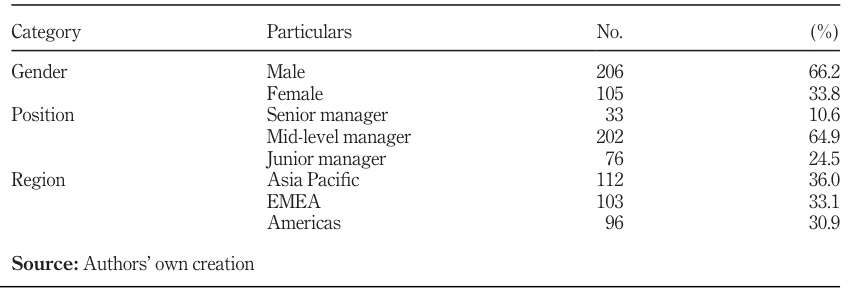
The demographic information of the respondents is shown in Table 1.
4.3 The no-response bias test
Following the recommendations of Armstrong and Overton (1977), the analysis compared the responses of every measurement item between the early respondents (the first 30%) and the late respondents (the last 30%). No statistically significant difference in these two cases was found (p = 0.29). This confirms that the present study was not affected by nonresponse bias.
5. Analysis of data with results
5.1 Measurement properties and discriminant validity test
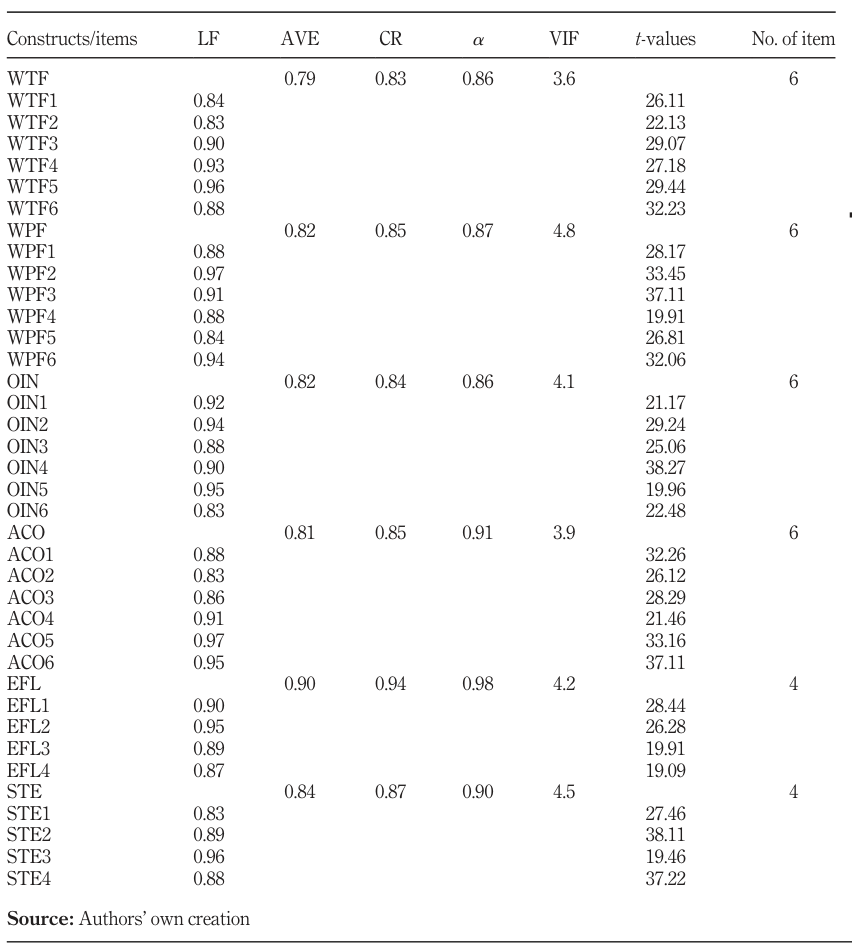
The loading factor (LF) of each item was calculated to assess the convergent validity. To verify the validity, reliability and consistency, and to look for defects of multicollinearity, we estimated average variance extracted (AVE), composite reliability (CR), Cronbach’s alpha (a) and variance inflation factor (VIF) of each construct. All the parameters were found within the specified range. The results are shown in Table 2.
On scrutiny, it was found that the square roots of all the AVEs were greater than the corresponding bifactor correlation coefficients, which fulfilled the Fornell and Larcker criterion (Fornell and Larcker, 1981), and confirmed discriminant validity. Results are shown in Table 3.
5.2 Common method variance
We received usable feedback from the respondents on which we conducted our analysis. Since this study is dependent on self-reported data, there is a chance of biased replies. Hence, we needed to perform common method variance (CMV). To get unbiased replies, we assured the respondents that their identities would not be disclosed. However, to confirm that the replies were unbiased, we performed Harman’s single-factor test (SFT) (Harman, 1976). The result emerged that the first factor was 32.62% of the variance, which was less than the recommended highest value of 50% (Podsakoff et al., 2003). However, since SFT is criticized as not being a robust and conclusive test for CMV (Ketokivi and Schroeder, 2004), the marker
correlation ratio test was also conducted (Lindell and Whitney, 2001), which did not show any evidence of CMV either. Thus, we can say that the self-reported data did not distort the results.
5.3 Analysis of moderating effects (multigroup analysis)
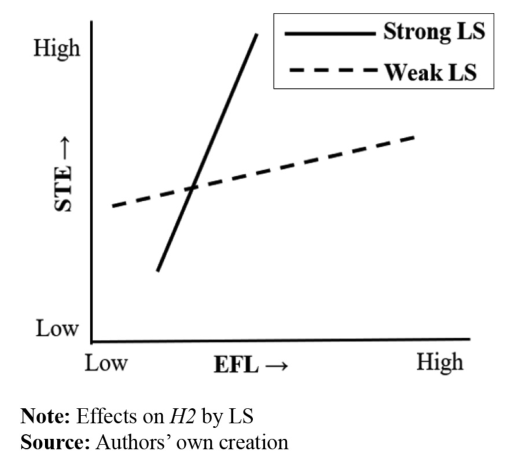
To ascertain if the moderators, OP and LS had significant effect on the respective linkages, we performed multigroup analysis (MGA). The moderator OP acts on the linkages H1a, H1b, H1c and H1d. We divided OP into two categories: Strong OP and Weak OP. The other moderator, LS, acts on the linkage H2. This moderator was also divided into two categories: Strong LS and Weak LS. If a moderator’s two categories have a p-value difference on the respective linkages that is either more than 0.95 or less than 0.05, it is said that the effects of the moderator are significant (Hair et al., 2016, 2019).
To perform MGA, we used the bias correlated and accelerated bootstrapping procedure with consideration of 5,000 resamples. The results show that the effects of the two moderators (OP and LS) had significant effects on the respective linkages. The results are shown in Table 4.
5.4 Assessment of structural equation modeling
The proposed model was examined through the blindfolding process using the accelerated and the bias-corrected bootstrapping approach on 5,000 resamples. We considered omission separation to be 5, through which we found the cross-validated redundancy for the appropriate predictors (Lew et al., 2016). The value of Q2 is 0.65 (Stone, 1974; Geisser, 1975). This confirms that the results of this study have predictive relevance.
To verify that the model is in order, we followed the procedure envisaged by Henseler et al. (2014). For this, we considered the standardized root mean square residual (SRMR) for the index. We estimated the values of SRMR and found that the values are 0.032 for PLSc and 0.063 for PLS. Both these values were less than 0.08 (Hu and Bentler, 1998), confirming that the proposed model is in order.
Through this process, we found the path coefficients of different linkages, p-values and coefficients of determinants (R2). The details are shown in Table 5.
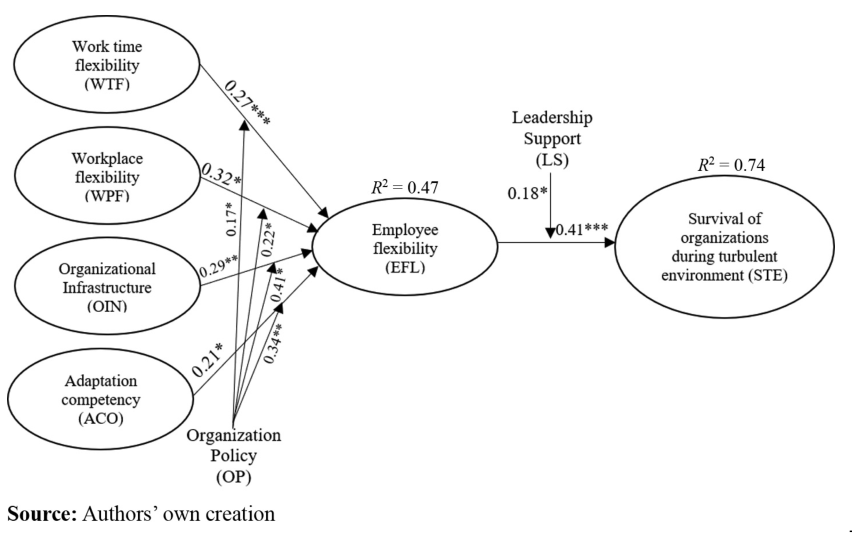
With all these inputs, the validated model is shown in Figure 2.
6. Results and discussions
This study shows that WTF, WPF, OIN and ACO impact EFL significantly. In turn, EFL impacts STE. This study used two moderators: OP and LS. The moderator OP acts on the four linkages, which are H1a, H1b, H1c and H1d, whereas the other moderator, LS, impacts on the linkage H2. This study shows that, during a STE, like the COVID-19 pandemic, EFL
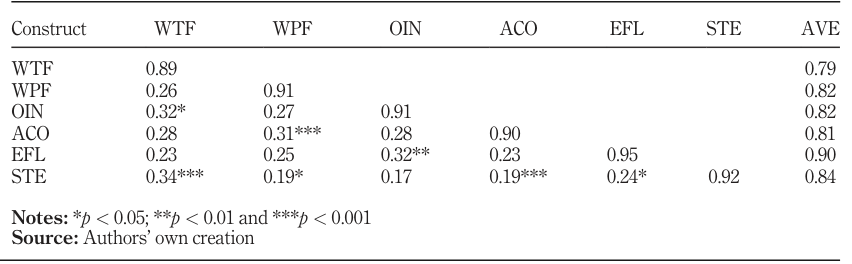
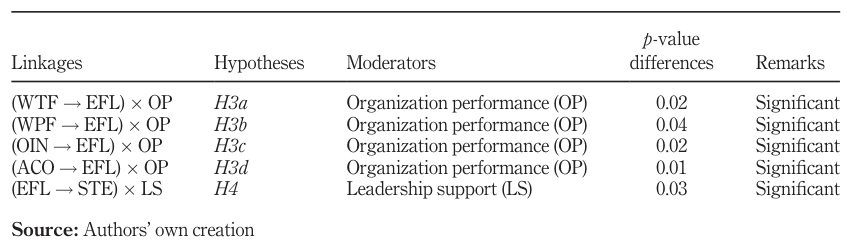
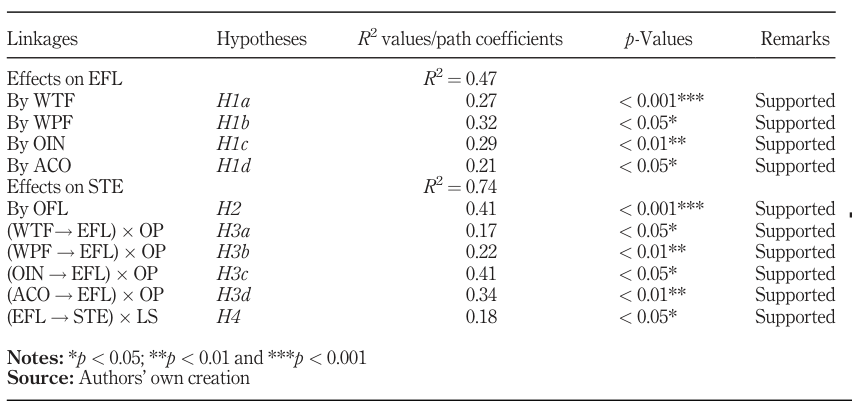
Table 5. Path coefficients, p-values, R2 values and results
impacts survival of organizations (STE), and we deem it to be important. This study has demonstrated that workplace and worktime flexibility impact the overall flexibility of the employees. The concept was supported by another study (Parsley, 2020) that highlighted how the pandemic had forced MNC employees to be more flexible to work in any time zone and from any place. This study has also highlighted that OIN and employee adaptation capability positively impact employees’ flexibility to address any turbulent conditions. This concept has also received support from other studies (Jallow et al., 2021).
The study has revealed that the impacts of WTF, WPF, OIN and ACO on EFL are significant and positive, since the relevant path coefficients are 0.27, 0.32, 0.29 and 0.21, with significance levels of p < 0.001 ***, p < 0.05 *, p < 0.01** and p < 0.05*, respectively. The impact of WPF on EFL (H1b) is the maximum since the path coefficient is the highest
among the four impacts. The impact of EFL on STE is significant, as the concerned path coefficient is 0.41, with significance level p < 0.001***. The moderator OP significantly impacts on the four linkages H1a, H1b, H1c and H1d, as the concerned path coefficients are 0.17, 0.22, 0.41 and 0.34, with levels of significance p < 0.05*, p < 0.01**, p <0.05* and p < 0.01**, respectively. The impact of the moderator LS on linkage H2 is significant, as the concerned path coefficient is 0.18, with level of significance p < 0.05(*). Regarding coefficients of determination, it appears that WTF, WPF, OIN and ACO could explain EFL 47% of the time, since R2 = 0.47. Besides, EFL could explain STE to the extent of 74%, since R2 = 0.74. The predictive power of the proposed theoretical model is 74%. The impact of WTF on EFL (H1a) is significant and is supported by an earlier study (Jones et al., 2008). The impact of WPF on EFL (H1b) is found to be significant and is also in accordance with an earlier study (Hill et al., 2008). The impact of OIN on EFL (H1c) is significant, which corresponds to Dyer and Shafer (1998). Also, the hypothesis ACO ! EFL (H1d) is found to be significant on analysis, which agrees with findings of earlier studies (Liu et al., 2013; Camps et al., 2015). The hypothesis EFL ! STE (H2) was validated through PLS-SEM analysis, and it has been supplemented by Golden et al. (2006).
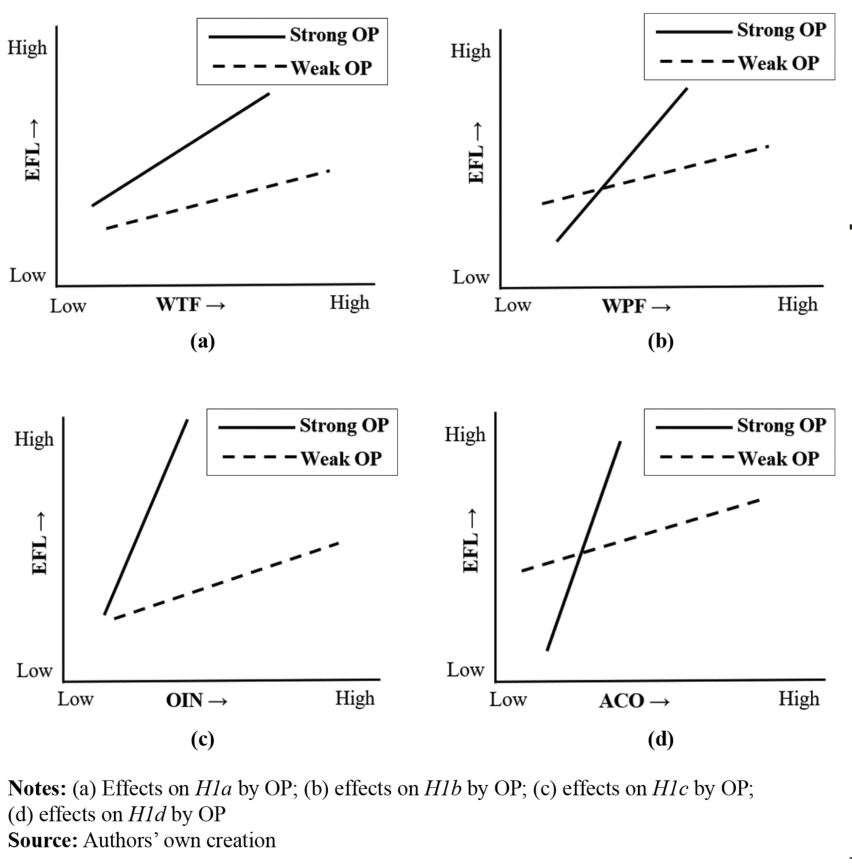
Now we shall discuss, through graphical representation, the effects of the moderator OP, categorized as Strong OP and Weak OP, on the four linkages H1a, H1b, H1c and H1d. The effects are described through four graphs collectively in Figure 3.
In all four graphs, the continuous lines and the dotted lines indicate the effects of Strong OP and Weak OP, respectively. With an increase of WTF (for H1a), WPF (for H1b), OIN (for H1c) and ACO (for H1d), Strong OP affects the rate of increase of EFL in all the graphs more than Weak OP does. This is indicated by the gradients of the continuous lines, which are greater than the gradients of the dotted lines.
Figure 4 describes the effects of LS (Strong LS and Weak LS) on the linkage H2. In the graph, the continuous line and dotted line indicate the effects of Strong LS and Weak LS, respectively. The graphs show that, as EFL increases, STE increases at a greater rate because of the effects of Strong LS than from the effects of Weak LS on the linkage H2, since the gradient of the continuous line is more than the gradient of the dotted line.
6.1 Theoretical contributions
Our study has been able to explain that WTF, WPF, OIN and ACO of the employees could impact EFL, which in turn impacts an organization’s chance of survival during a STE. Here the mediating endogenous variable EFL could establish a nexus between the predictors of EFL and survival of organizations during a STE by completely absorbing the essentiality and significance of the direct linkage. The authors claim that this idea enriches the extant literature concerning human resource management. Thus, our study claims to have established a connection between a macrolevel STE like the COVID-19 pandemic and worker experience, in the context of HR management research. This is a unique theoretical contribution of this study. The moderating effects of OP on the linkages between EFL and its predictors is perceived to have added to the empirical research in the context of establishing the relation between the predictors and EFL. More specifically, by considering the moderating effects of OP on the four linkages, this study has been able to elucidate how the formation of the appropriate policy could strengthen the impacts of these predictors to improve EFL. The study has shown that the more flexible employees are in their functioning, the more likely the organizations will survive any turbulent conditions, especially when the impact of EFL is influenced by the appropriate strong support of the leadership. Consideration of these two
moderators is perceived to have strengthened the effectiveness of the proposed theoretical model. This is claimed as another theoretical contribution of our study. A couple of studies have analyzed how EFL could help organizations to survive in the macrolevel turbulent conditions (Ketkar and Sett, 2010; Höse et al., 2023). However, our study offers a special contribution by theorizing the mediating effects of EFL and by interpreting its contribution toward organizations’ survival in a STE, in the context of the components of EFL, like polyvalence, anticipation and adaptation (Van den Berg and Van der Velde, 2005; Jerez-Gómez et al., 2005). Besides, the explanation of EFL in our study provides new outcomes, as we have synthesized flexibility in the context of employees’ in- role behavior which helps them to shoulder risk-taking abilities to address any STE (Edwards, 2009). Thus, studies have analyzed how improving EFL could help organizations to survive turbulent conditions. But such arguments inherent in the extant literature have been expanded in the present study. For example, apart from the impacts of predictors on EFL, we have found that implementing appropriate organizational risk management policies could also improve EFL.
This study has taken into consideration LS for policy implementation, which the authors claim is a unique concept that adds value to the current literature. Although previous studies have demonstrated that improving EFL could help organizations to survive a crisis, the present study has highlighted that the outcome is positively influenced when EFL is facilitated by active LS. Therefore, the contribution and influence of LS for organizations’ survival from a crisis is a novel argument which has expanded the prevailing body of knowledge. Our study has used RBV and DCV theories to identify the antecedents that could impact EFL. Employees are the resources of the organizations they work for. With input from RBV, our study has been able to explain how employees’ different characteristics and abilities could make them more flexible to address any unforeseen situation. Again, it explains how the dynamic situation, emerging from a STE, could be addressed by appropriately increasing employees’ flexible attitude. This idea has been borrowed from DCV theory. It is to note that the ability of the employees to be more flexible in a crisis is considered a DC. Here, the organizations also need to be flexible to allow employees to work from anywhere at any time they choose and that is feasible for them. Here, the organizations also need to possess and develop their dynamic ability of sensing and seizing opportunities, and reconfiguring resources to react and respond to the dynamic environment. Such dynamic abilities could also help employees to be more adaptable to work at any time from any place with the help of appropriate technologies to keep the operations of the MNCs active in turbulent conditions. By considering RBV and DCV, we were able to successfully build the theoretical model. This is also claimed to be another theoretical contribution of our study. It is relevant to mention here that RBV is associated with a managerial framework that can be applied to identify organizations’ strategic resources to achieve success. The HR managers need to exploit the internal resources of the organizations which have valuable, rare, inimitable and nonsubstitutable (VRIN) characteristics. One of such resources is the competencies of the employees for being flexible to address any crisis for the survival and stability of their organizations. Thus, in the dynamic situation, the flexibility of employees is construed to be a critical competency, which corroborates both RBV and DCV.
6.2 Practical implications
This study has several practical implications for policymakers and HR practitioners to learn how to prepare themselves to face any untoward STE. Our study has shown that EFL is the foundation on which organizations can survive in any macrolevel turbulent conditions. Our study has shown that WTF and WPF could impact EFL (H1a and H1b), and they are important for organizations in a macrolevel STE (H2). This implies that HR managers must focus their attention on improving their employees’ skills to make them more flexible. HR managers should see that employees are comfortable working anywhere and in different time zones. Besides, the role of HR managers in this context is very critical when recruiting employees, as they need to assess the employees’ talent level and remote working capability and their commitments so that at a time of crisis, they are responsible and accountable by being more flexible to work from any place at any time. This is more applicable for MNCs. By improving employees’ skilling and reskilling abilities through special training, they can improve their ability to adapt, thus expanding their flexibility (H1d). So far as MNCs are concerned, the leaders of the companies need to recruit employees from different countries so that their organizations’ cultural competencies are developed. It is essential that, during any apocalyptic situation, MNCs do not feel much constraint to continue their business activities in different subsidiaries operating in various parts of the world. The managers of organizations should focus attention on upgrading their infrastructures to improve EFL (H1c) to combat any unforeseen situation. HR managers should try to motivate employees to learn about any new technology that could be used to address an unwanted situation. The employees should be motivated to work with ease in any changed environment and to work with a new team under new leadership and to unhesitatingly undertake more stressful assignments. Of course, it is not possible to predict the future and when and in what form an untoward situation may occur. Therefore, HR managers must be confident to prepare the organizations to embrace uncertainty and unpredictability by properly using the existing workforce. The HR managers should train the employees to be competent to work under any constraining circumstances. This will help organizations to reduce their workforce to adjust their expenses. At the same time, HR managers must strategically make provisions to increase the workforce as and when the climate is favorable. The leadership of organizations knows that a STE is not everlasting and will eventually improve. Leadership should take advantage of this opportunity to train the employees, appropriately borrowing from their experience from the preceding turbulent conditions. HR managers should communicate a well-planned strategy for combatting future adverse situations, and this strategy must have universal applicability for MNCs. Managers have the responsibility to motivate the workforce to be more proactive and reactive so that they can continue functioning without any impediment even when an unforeseen situation crops up. Managers also need to improve themselves to realize how to prioritize what must be done when they notice an impending STE.
6.3 Limitations and future scope
This study provides important inputs to researchers as well as to practitioners on how they can survive any STE. However, our study is still not free from all limitations. We conducted the survey with a sample size of 311 respondents from 11 MNCs. To project a general global picture, future researchers should consider more MNCs and include more respondents. We have studied the issue of organizations’ survival during the COVID-19 pandemic, but the results may not be applicable for addressing other STEs like financial or political crises. Future researchers may focus on this point. We have arrived at the results by analyzing
cross-sectional data. To obtain more generic results, future researchers may conduct a longitudinal study. Our study did not analyze the effects of the COVID-19 pandemic on a particular type of organization, such as service-oriented organizations or manufacturing organizations. The model could provide more practical use if it could represent a specific type of industry. Our study has only focused on instrumentalities for MNCs’ survival during any macrolevel STE. Turbulent events affect all kinds of organizations, including small and medium enterprises, domestic organizations and so on. Our study ought to have analyzed this issue, covering all types of organizations to project a more comprehensive model. Future researchers may study this idea. The predictive power of our theoretical model is 74%. Future researchers may consider other boundary conditions to examine if, by including them, the predictive power of the theoretical model could also be improved. The present study has not discussed and analyzed the impacts of social sustainability on employees’ wellbeing, although it has highlighted that employees who are flexible regarding both workplace and work time could have a significant impact on their wellbeing. Further discussion about this issue was not carried out in the present study, which is considered a limitation. It is suggested that future researchers should nurture this issue.
7. Conclusion
Our study has highlighted how EFL could be a driving force for an organization to survive in macrolevel STEs. This study has provided some pragmatic suggestions of what an organization could do to survive during any crisis. Employees’ skills could be improved to be open to change and to sharing knowledge and creativity. This study suggests that, in the context of HR management strategy, employees must be comfortable in accepting any change in the dynamic environment. Employees should have training to acquire risk-taking capabilities to tackle any untoward complexity and to overcome uncertainty. Employees play an important role in addressing any turbulent conditions so that the organizations’ functions are not interrupted. Our study investigated the important role of HR managers. They are responsible for training the employees to be more flexible and to work in different time zones and anywhere with greater polyvalence and better adaptability. Managers must improve the OIN to be ready to address any untoward situation. This study also shows how appropriate OP and LS could help improve employees’ abilities in this regard. Although this study provides an appropriate model for organizations’ survival during and after any turbulent conditions, it is expected that this model could address any specific type of crisis if the model is adjusted accordingly. This theoretical model is deemed to be helpful for managers of different organizations to prepare their workforce by improving their flexibility and to realize what is necessary to address any STE for their organizations to survive.
References
Agbim, K.C. and Idris, A.J. (2015), “Competitive advantage through knowledge dissemination: an empirical analysis of hotels in Makurdi metropolis, Benue state, Nigeria”, European Journal of Business and Innovation Research, Vol. 3 No. 1, pp. 22-35.
Amirkhanpour, M. and Vrontis, D. (2013), “Mobile marketing: a contemporary strategic perspective in today’s turbulent economy”, Paper presented at the ICA Global Research Conference: Cooperatives during Crisis and Post-Crisis Period (COOPCY 2013), Nicosia, Cyprus.
Arfaoui, N., Hofaidhllaoui, M. and Chawla, G. (2019), “Social performance of the company: an explanation centralized on the social and technological factors”, EuroMed Journal of Business, Vol. 15 No. 1, pp. 102-126.
Armstrong, J.S. and Overton, T.S. (1977), “Estimating nonresponse bias in mail surveys”, Journal of Marketing Research, Vol. 14 No. 3, pp. 396-402.
Azevêdo, R. (2020), “Global trade will be vital to economic recovery from covid-19”, The Guardian, available at: www.theguardian.com/world/2020/apr/08/global-trade-will-be-vital-to-the-economi crecovery-from-covid-19 (accessed on 12 January 2023).
Baker, S.R., Davis, S.J., Kost, K., Sammon, M. and Viratyosin, T. (2020), “The unprecedented stock- market reaction to covid-19”, available at: https://insight.kellogg.Northwestern.edu/article/what- explains-the-unprecedentedstock-market-reaction-to-covid-19 (accessed 19 August 2022).
Baldwin, R. and Weder di Mauro, B., (2020), “Introduction”, in Baldwin, R. and Weder di Mauro, B. (Eds), Economics in the Time of COVID-19, CEPR, pp. 1-30.
Barney, J. (1991), “Firm resources and sustained competitive advantage”, Journal of Management, Vol. 17 No. 1, pp. 99-120.
Becker, B.E. and Huselid, M.A. (2006), “Strategic human resource management: where do we go from here?”, Journal of Management, Vol. 32 No. 6, pp. 898-925.
Belyaeva, Z., Shams, S.M.R., Santoro, G. and Grandhi, B. (2020), “Unpacking stakeholder relationship management in the public and private sectors: the comparative insights”, EuroMed Journal of Business, Vol. 15 No. 3, pp. 269-281.
Bettiol, M., Capestro, M., Di Maria, E. and Micelli, S. (2022), “Overcoming pandemic challenges through product innovation: the role of digital technologies and servitization”, European Management Journal, Vol. 40 No. 5, pp. 707-717.
Beulen, E. (2012), “I’m working while they’re sleeping: time zone separation challenges and solutions”, Strategic Outsourcing: An International Journal, Vol. 5 No. 1, pp. 89-93.
Bhattacharya, M. and Wright, P.M. (2005), “Managing human assets in an uncertain world: applying real options theory to HRM”, The International Journal of Human Resource Management, Vol. 16 No. 6, pp. 929-948.
Campanella, F., Del Giudice, M., Thrassou, A. and Vrontis, D. (2020), “Ambidextrous organizations in the banking sector: an empirical verification on banks’ performance and conceptual development”, The International Journal of Human Resource Management, Vol. 31 No. 2, pp. 272-302.
Camps, J., Oltra, V., Manzano, J.A., Buenaventura-Vera, G. and Torres-Carballo, F. (2015), “Individual performance in turbulent environments: the role of organizational learning capability and employee flexibility”, Human Resource Management, Vol. 55 No. 3, pp. 363-383.
Cañibano, A. (2019), “Workplace flexibility as a paradoxical phenomenon: exploring employee experiences”, Human Relations, Vol. 72 No. 2, pp. 444-470.
Carpenter, S. (2018), “Ten steps in scale development and reporting: a guide for researchers”, Communication Methods and Measures, Vol. 12 No. 1, pp. 25-44.
Chatterjee, S. (2020), “Factors impacting behavioral intention of users to adopt IoT in India: from security and privacy perspective”, International Journal of Information Security and Privacy, Vol. 14 No. 4, pp. 92-112.
Chatterjee, S. (2021), “Antecedence of attitude towards IoT usage: a proposed unified model for IT professionals and its validation”, International Journal of Human Capital and Information Technology Professionals, Vol. 12 No. 2, pp. 13-34.
Chatterjee, S., Chaudhuri, R., Sakka, G., Grandhi, B., Galati, A., Siachou, E. and Vrontis, D. (2021a), “Adoption of social media marketing for sustainable business growth of SMEs in emerging economies: the moderating role of leadership support”, Sustainability, Vol. 13 No. 21, p. 12134.
Chatterjee, S., Chaudhuri, R. and Vrontis, D. (2021b), “Usage intention of social robots for domestic purpose: from security, privacy, and legal perspectives”, Information Systems Frontiers, doi: 10.1007/s10796-021-10197-7.
Chatterjee, S., Chaudhuri, R. and Vrontis, D. (2022), “AI and digitalization in relationship management: impact of adopting AI-embedded CRM system”, Journal of Business Research, Vol. 150, pp. 437-450.
Chaudhuri, R., Chatterjee, S. and Vrontis, D. (2022a), “Antecedents of privacy concerns and online information disclosure: moderating role of government regulation”, EuroMed Journal of Business, Vol. 18 No. 3, pp. 467-486.
Chaudhuri, R., Chatterjee, S. and Vrontis, D. (2022b), “Big data analytics in strategic sales performance: mediating role of CRM capability and moderating role of leadership support”, EuroMed Journal of Business, Vol. 17 No. 3, pp. 295-311.
Chaudhuri, R., Chatterjee, S., Kraus, S. and Vrontis, D. (2023), “Assessing the AI-CRM technology capability for sustaining family businesses in times of crisis: the moderating role of strategic intent”, Journal of Family Business Management, Vol. 13 No. 1, pp. 46-67.
Chebbi, H., Yahiaoui, D., Vrontis, D. and Thrassou, A. (2015), “Building multi-unit ambidextrous organizations – a transformative framework”, Human Resource Management, Vol. 54 No. S1, pp. 155-177.
Clarke, M.C., Koch, L.C. and Hill, E.J. (2004), “The work-family interface: differentiating balance and fit”, Family and Consumer Sciences Research Journal, Vol. 33 No. 2, pp. 121-140.
Cohen, M.D., March, J.G. and Olsen, J.P. (1972), “A garbage can model of organizational choice”, Administrative Science Quarterly, Vol. 17 No. 1, pp. 1-25.
Cooke, F.L. (2018), “Concepts, contexts, and mindsets: putting human resource management research in perspectives”, Human Resource Management Journal, Vol. 28 No. 1, pp. 1-13.
Deb, M. and David, E.L. (2014), “An empirical examination of customers’ adoption of m-banking in India”, Journal of Marketing Intelligence and Planning, Vol. 32 No. 4, pp. 475-494. del Rio-Chanona, R.M., Mealy, P., Pichler, A., Lafond, F. and Farmer, D. (2020), “Supply and demand shocks in the covid-19 pandemic: an industry and occupation perspective”, Oxford Review of Economic Policy, Vol. 36 No. Supplement_1, pp. 94-137.
DeVellis, R. (2012), Scale Development Theory and Applications, Sage Publications.
Dimitropoulos, P., Koronios, K., Thrassou, A. and Vrontis, D. (2020), “Cash holdings, corporate performance and viability of Greek SMEs: implications for stakeholder relationship management”, EuroMed Journal of Business, Vol. 15 No. 3, pp. 333-348.
Dyer, L. and Ericksen, J. (2006), “Dynamic organizations: achieving marketplace agility through workforce scalability”, CAHRS Working Paper, pp. 6-12.
Dyer, L. and Shafer, R. (1998), “From human resource strategy to organizational effectiveness: lessons from research on organizational agility”, in Wright, P., Dyer, L., Boudreau, J. and Milkovich, G. (Eds), Strategic Human Resource Management in the 21st Century, JAI Press, pp. 145-174.
Edwards, M.G. (2009), “An integrative meta theory for organizational learning and sustainability in turbulent times”, The Learning Organization, Vol. 16 No. 3, pp. 189-207. Forbes Report (2018), “Top multinational performers in 2017”, Forbes.com, available at: www.forbes. com/top-multinational-performers/list/ (accessed 22 April 2020).
Fornell, C. and Larcker, D.F. (1981), “Evaluating structural equation models with unobservable variables and measurement error”, Journal of Marketing Research, Vol. 18 No. 1, pp. 39-50.
Geisser, S. (1975), “The predictive sample reuse method with applications”, Journal of the American Statistical Association, Vol. 70 No. 350, pp. 320-328.
Golden, T.D., Veiga, J.F. and Simsek, Z. (2006), “Telecommuting’s differential impact on work-family conflict: is there no place like home?”, Journal of Applied Psychology, Vol. 91 No. 6, pp. 1340-1350.
González, V.I., Sheshadri, C., Chaudhuri, R., Kumar, A. and Singh, S.K. (2022), “Resource integration and dynamic capability of frontline employee during covid-19 pandemic: from value creation and engineering management perspectives”, Technological Forecasting and Social Change, Vol. 176, p. 121446.
Greenwood, R. and Hinings, C.R. (1996), “Understanding radical organizational change: bringing together the old and the new institutionalism”, The Academy of Management Review, Vol. 21 No. 4, pp. 1022-1054.
Hair, J.F., Jr, Hult, G.T.M., Ringle, C. and Sarstedt, M. (2016), A Primer on Partial Least Squares Structural Equation Modeling (PLS-SEM), Sage Publications, London.
Hair, J.F., Risher, J.J., Sarstedt, M. and Ringle, C.M. (2019), “When to use and how to report the results of PLS-SEM”, European Business Review, Vol. 31 No. 1, pp. 2-24.
Halinski, M. and Duxbury, L. (2019), “Workplace flexibility and its relationship with work-interferes- with-family”, Personnel Review, Vol. 49 No. 1, pp. 149-166.
Harman, H.H. (1976), Modern Factor Analysis, 3rd ed., The University of Chicago Press.
Helfat, C.E. and Peteraf, M.A. (2009), “Understanding dynamic capabilities: progress along a developmental path”, Strategic Organization, Vol. 7 No. 1, pp. 91-102.
Henseler, J., Ringle, C.M. and Sarstedt, M. (2014), “A new criterion for assessing discriminant validity in variance-based structural equation modeling”, Journal of the Academy of Marketing Science, Vol. 43 No. 1, pp. 115-135.
Hill, E.J., Grzywacz, J.G., Allen, S., Blanchard, V.L., Matz-Costa, C., Shulkin, S. and Pitt-Casouphes, M. (2008), “Defining and conceptualizing workplace flexibility”, Community, Work, and Family, Vol. 11 No. 2, pp. 149-163.
Höse, K., Amaral, A., Götze, U. and Peças, P. (2023), “Manufacturing flexibility through industry 4.0 technological concepts—impact and assessment”, Global Journal of Flexible Systems Management, Vol. 24 No. 2, pp. 271-289.
Hu, L. and Bentler, P.M. (1998), “Fit indices in covariance structure modeling: sensitivity to under parameterized model misspecification”, Psychological Methods, Vol. 3 No. 4, pp. 424-453.
Ilyas, I.M. and Osiyevskyy, O. (2022), “Exploring the impact of sustainable value proposition on firm performance”, European Management Journal, Vol. 40 No. 5, pp. 729-740.
Jain, S. and Khurana, N. (2017), “Enhancing employee development through online training: factors that impact on learning effectiveness”, Development and Learning in Organizations, Vol. 31 No. 3, pp. 32-35.
Jallow, H., Renukappa, S. and Suresh, S. (2021), “The impact of covid-19 outbreak on United Kingdom infrastructure sector”, Smart and Sustainable Built Environment, Vol. 10 No. 4, pp. 581-593.
Jena, L.K. and Memon, N.Z. (2018), “Does workplace flexibility usher innovation? A moderated mediation model on the enablers of innovative workplace behavior”, Global Journal of Flexible Systems Management, Vol. 19 No. 1, pp. 5-17.
Jerez-Gómez, P., Céspedes-Lorente, J.J. and Valle-Cabrera, R. (2005), “Organizational learning and compensation strategies: evidence from the Spanish chemical industry”, Human Resource Management, Vol. 44 No. 3, pp. 279-299.
Jones, B.L., Scoville, D.P., Hill, E.J., Childs, G., Leishman, J.M. and Nally, K.S. (2008), “Perceived versus used workplace flexibility in Singapore: predicting work-family fit”, Journal of Family Psychology, Vol. 22 No. 5, pp. 774-783.
Jordan, S.L., Wihler, A., Hochwarter, W.A. and Ferris, G.R. (2019), “The roles of grit in human resources theory and research”, in Buckley, M.R., Wheeler, A.R., Baur, J.E. and Halbesleben, J.R.B. (Eds), Research in Personnel and Human Resources Management, Emerald Publishing, Bingley, UK, pp. 53-88.
Jurksiene, L. and Pundziene, A. (2016), “The relationship between dynamic capabilities and firm competitive advantage: the mediating role of organizational ambidexterity”, European Business Review, Vol. 28 No. 4, pp. 1-17.
Kaufman, B. (2015), “Evolution of strategic HRM as seen through two founding books: a 30th anniversary perspective on development of the field”, Human Resource Management, Vol. 54 No. 3, pp. 389-407.
Ketkar, S. and Sett, P.K. (2009), “HR flexibility and firm performance: analysis of a multi-level causal model”, The International Journal of Human Resource Management, Vol. 20 No. 5, pp. 1009-1038.
Ketkar, S. and Sett, P.K. (2010), “Environmental dynamism, human resource flexibility, and firm performance: analysis of a multi-level causal model”, The International Journal of Human Resource Management, Vol. 21 No. 8, pp. 1173-1206.
Ketokivi, M.A. and Schroeder, R.G. (2004), “Perceptual measures of performance: fact or fiction?”, Journal of Operations Management, Vol. 22 No. 3, pp. 247-264.
Khan, G.F., Sarstedt, M., Shiau, W.-L., Hair, J.F., Ringle, C.M. and Fritze, M.P. (2019), “Methodological research on partial least squares structural equation modeling (PLS-SEM): an analysis based on social network approaches”, Internet Research, Vol. 29 No. 3, pp. 407-429.
Khorana, S. and Kizgin, H. (2022), “Harnessing the potential of artificial intelligence to foster citizens’ satisfaction: an empirical study on India”, Government Information Quarterly, Vol. 39 No. 4, p. 101621.
Kraus, S., Clauss, T., Breier, M., Gast, J., Zardini, A. and Tiberius, V. (2020), “The economics of covid-19: initial empirical evidence on how family firms in five European countries cope with the corona crisis”, International Journal of Entrepreneurial Behavior and Research, Vol. 26 No. 5, pp. 1067-1092. la Gala-Velásquez, D., Hurtado-Palomino, A. and Arredondo-Salas, A.Y. (2023), “Organisational flexibility and innovation performance: the moderating role of management support”, Global Journal of Flexible Systems Management, Vol. 24 No. 2, pp. 219-234.
Lee, C.P. and Shim, J.P. (2007), “An exploratory study of radio frequency identification (RFID) adoption in the healthcare industry”, European Journal of Information Systems, Vol. 16 No. 6, pp. 712-724.
Lew, Y.K., Sinkovics, R.R., Yamin, M. and Khan, Z. (2016), “Trans-specialization understanding in international technology alliances: the influence of cultural distance”, Journal of International Business Studies, Vol. 47 No. 5, pp. 577-594.
Lindell, M.K. and Whitney, D.J. (2001), “Accounting for common method variance in cross-sectional research designs”, Journal of Applied Psychology, Vol. 86 No. 1, pp. 114-121.
Liu, N.-C., Chou, C.-Y. and Wang, C.-Y. (2013), “Achieving organizational effectiveness through human capital acquisition practices – the moderating effects of environment turbulence and knowledge sharing climate”, Journal of Human Resource Management, Vol. 13 No. 3, pp. 1-25.
McKibbin, W.J. and Fernando, R. (2020), The Global Macroeconomic Impacts of COVID-19: Seven Scenarios, Brookings Institution, Washington, DC, D.C.
Mintzberg, H. (1992), Structure in Fives: Designing Effective Organizations, Prentice Hall, Englewood Cliffs, N.J.
Muellbauer, J. (2020), The Coronavirus Pandemic and US Consumption, VOX CERP Policy Portal, No. 11.
Müller, R. and Turner, R. (2010), “Leadership competency profiles of successful project managers”, International Journal of Project Management, Vol. 28 No. 5, pp. 437-448.
Nijssen, M. and Paauwe, J. (2012), “HRM in turbulent times: how to achieve organizational agility?”, The International Journal of Human Resource Management, Vol. 23 No. 16, pp. 3315-3335.
Palumbo, R. (2020), “Let me go to the office! an investigation into the side effects of working from home on work-life balance”, International Journal of Public Sector Management, Vol. 33 Nos 6/7, pp. 771-790.
Parsley, D. (2020), “Coronavirus: global outbreak of covid-19 could cause recession as governments urged to restore consumer confidence”, INews.co.uk, available at: https://inews.co.uk/news/ coronavirus-latest-financial-crisis-global-outbreak-covid-19-recession-consumer-confidence-404139 (accessed 12 January 2022).
Piekkari, R. and Westney, D.E. (2017), “Language as a meeting ground for research on the MNC and organization theory”, in Dörenbächer, C. and Geppert, M. (Eds), Multinational Corporations and Organization Theory: Post Millennium Perspectives, Emerald Publishing, Bingsley, pp. 193-232.
Podsakoff, P.M., MacKenzie, S.B., Lee, J.Y. and Podsakoff, N.P. (2003), “Common method biases in behavioral research: a critical review of the literature and recommended remedies”, Journal of Applied Psychology, Vol. 88 No. 5, pp. 879-903.
Prouska, R. and Psychogios, A. (2018), “Do not say a word! conceptualizing employee silence in a long- term crisis context”, The International Journal of Human Resource Management, Vol. 29 No. 5, pp. 885-914.
Prouska, R. and Psychogios, A. (2019), “Should I say something? A framework for understanding silence from a line manager’s perspective during an economic crisis”, Economic and Industrial Democracy, Vol. 40 No. 3, pp. 611-635.
Psychogios, A. and Prouska, R. (2019), Managing People in Small and Medium Enterprises in Turbulent Contexts, Routledge Publications, London.
Pulakos, E.D., Arad, S., Donovan, M.A. and Plondon, K.E. (2000), “Adaptability in the workplace: development of a taxonomy of adaptive performance”, Journal of Applied Psychology, Vol. 85 No. 4, pp. 612-624.
Ranjan, C., Chatterjee, S., Vrontis, D. and Giovando, G. (2023), “Digital workplace and organization performance: moderating role of digital leadership capability”, Journal of Innovation and Knowledge, Vol. 8 No. 1, p. 100334.
Riley, M. and Lockwood, A. (1997), “Strategies and measurement for workforce flexibility: an application of functional flexibility in a service setting”, International Journal of Operations and Production Management, Vol. 17 No. 4, pp. 413-419.
Ruel, E., Wagner, W.E. and Gillespie, B.J. (2016), The Practice of Survey Research: Theory and Applications, Sage Publication, UK.
Sánchez, A.M., Pérez, M., de Luis Carnicer, P. and José Vela Jiménez, M. (2007), “Teleworking and workplace flexibility: a study of impact of firm performance”, Personnel Review, Vol. 36 No. 1, pp. 42-64.
Sheshadri, C. (2019), “Influence of IoT policy on quality of life: from government and citizens’ perspectives”, International Journal of Electronic Government Research, Vol. 15 No. 2, pp. 19-38.
Sheshadri, C. (2020), “The safety of IoT-enabled system in smart cities of India: do ethics matter?”, International Journal of Ethics and Systems, Vol. 36 No. 4, pp. 601-618.
Sheshadri, C. (2021), “Dark side of online social games (OSG) using Facebook platform: effect of age, gender, and identity as moderators”, Information Technology and People, Vol. 34 No. 7, pp. 1800-1818.
Siachou, E., Chaudhuri, R. and Vrontis, D. (2022), “Examining the dark side of human resource analytics: an empirical investigation using the privacy calculus approach”, International Journal of Manpower, Vol. 43 No. 1, pp. 52-74.
Stich, J.-F. (2020), “Flexible working and applicant attraction: a person–job fit approach”, Personnel Review, Vol. 50 No. 1, pp. 358-378.
Stone, M. (1974), “Cross validatory choice and assessment of statistical predictions”, Journal of the Royal Statistical Society: Series B (Methodological), Vol. 36 No. 2, pp. 111-147.
Teece, J. (2007), “Explicating dynamic capabilities: the nature and micro foundations of (sustainable) enterprise performance”, Strategic Management Journal, Vol. 28 No. 13, pp. 1319-1350.
Teece, D.J. (2014), “The foundations of enterprise performance: dynamic and ordinary capabilities in an (economic) theory of firms”, Academy of Management Perspectives, Vol. 28 No. 4, pp. 328-352.
Teece, D.J., Pisano, G. and Shuen, A. (1997), “Dynamic capabilities and strategic management”, Strategic Management Journal, Vol. 18 No. 7, pp. 509-533.
Thrassou, A., Chatterjee, S., Chaudhuri, R. and Vrontis, D. (2022), “The influence of online customer reviews on customers’ purchase intentions: a cross-cultural study from India and the UK”, International Journal of Organizational Analysis, Vol. 30 No. 6, pp. 1595-1623.
Turner, J.R. and Muller, R. (2005), “The project manager’s leadership style as a success factor on projects: a literature review”, Project Management Journal, Vol. 36 No. 2, pp. 49-61.
Vakola, M., Soderquist, K.E. and Prastacos, G.P. (2007), “Competency management in support of organisational change”, International Journal of Manpower, Vol. 28 Nos 3/4, pp. 260-275. Van den Berg, P.T. and Van der Velde, M. (2005), “Relationships of functional flexibility with individual and work factors”, Journal of Business and Psychology, Vol. 20 No. 1, pp. 111-129. Van Knippenberg, D. (2013), “Leadership and decision making: defining a field”, in Highhouse, S., Dalal, R.S. and Salas, E. (Eds), Judgment and Decision Making at Work, Routledge Publications, London, pp. 140-158.
Vogel, R. and Güttel, W.H. (2013), “The dynamic capability view in strategic management: a bibliometric review”, International Journal of Management Reviews, Vol. 15 No. 4, pp. 426-446.
Vrontis, D., Chaudhuri, R. and Chatterjee, S. (2022), “Adoption of digital technologies by SMEs for sustainability and value creation: moderating role of entrepreneurial orientation”, Sustainability, Vol. 14 No. 13, p. 7949.
Wamba, S.F., Dubey, R., Gunasekaran, A. and Akter, S. (2020), “The performance effects of big data analytics and supply chain ambidexterity: the moderating effect of environmental dynamism”, International Journal of Production Economics, Vol. 222, p. 107498.
Willaby, H.W., Daniel, S.J., Costa, B.D., MacCann, B.C. and Roberts, R.D. (2015), “Testing complex models with small sample sizes: a historical overview and empirical demonstration of what partial least squares (PLS) can offer differential psychology”, Personality and Individual Differences, Vol. 84, pp. 73-78.
Wójcik, P. (2015), “Exploring links between dynamic capabilities perspective and resource-based view: a literature overview”, International Journal of Management and Economics, Vol. 45 No. 1, pp. 83-107.
Worthington, R.L. and Whittaker, T.A. (2006), “Scale development research: a content analysis and recommendations for best practices”, The Counseling Psychologist, Vol. 34 No. 6, pp. 806-838.
Wright, P.M. and Snell, S.A. (1998), “Toward a unifying framework for exploring fit and flexibility in strategic human resource management”, The Academy of Management Review, Vol. 23 No. 4, pp. 756-772.
Zagelmeyer, S. and Gollan, P.J. (2012), “Exploring terra incognita: preliminary reflections on the impact of the global financial crisis upon human resource management”, The International Journal of Human Resource Management, Vol. 23 No. 16, pp. 3287-3294.
Appendix
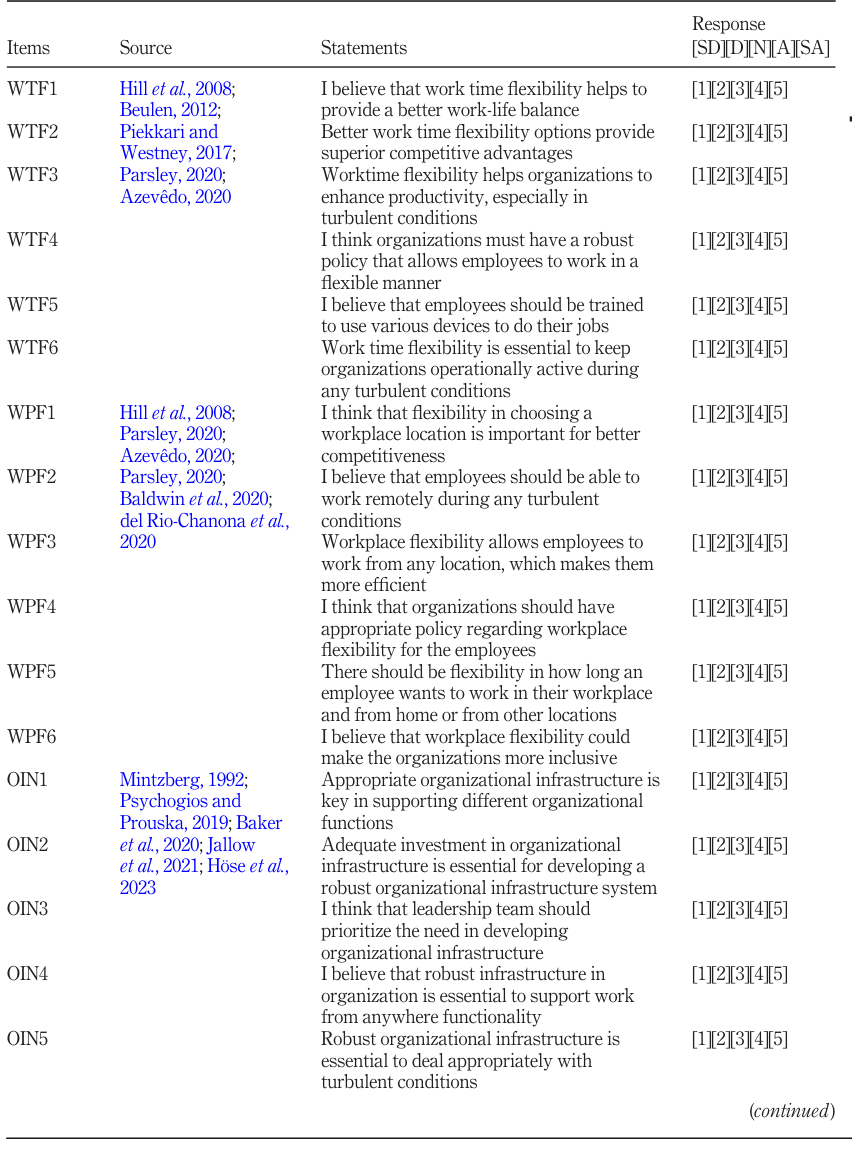
Table A1. Summary of questions
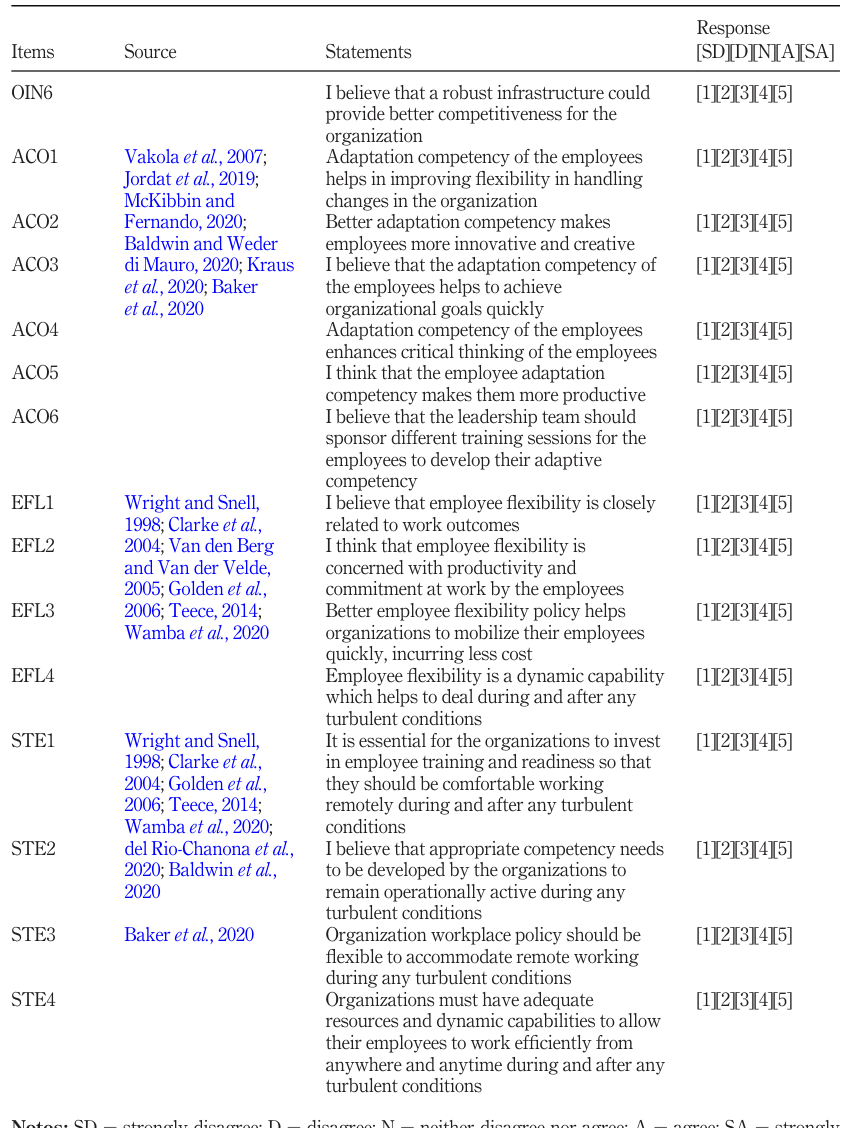
Notes: SD = strongly disagree; D = disagree; N = neither disagree nor agree; A = agree; SA = strongly agree
Source: Authors’ own creation