Abstract
Diabetes and obesity are rising challenges in India, yet awareness and adoption of GLP-1 receptor agonists remain limited. A 300-patient survey revealed key adoption patterns using Roger's model: very early adopters prioritize awareness and innovation, early adopters value regional convenience, and late adopters focus on affordability. Findings highlight limited awareness (66.2%) and adoption (17%), with cost and side effects as major barriers. Urbanization, sedentary lifestyles, and obesity (58.2%) exacerbate risks, while 77.3% express openness to new therapies. Strong support (72.1%) for social media campaigns suggests potential for awareness-driven adoption strategies. Improved education, cost reduction, and lifestyle interventions are critical for advancing GLP-1 adoption and enhancing diabetes and obesity management in India. Keywords: GLP-1 receptor agonists, diabetes management, obesity management, Indian market, Roger's model, patient survey, early adoption, awareness, affordability, lifestyle factors, urbanization, digital health campaigns. --------------------------------------------------------------------------------------------------------------------------------------- Date of Submission: 21-12-2024 Date of Acceptance: 01-01-2025 ---------------------------------------------------------------------------------------------------------------------------------------
I. Introduction
Diabetes and Obesity in India
India faces an alarming rise in the prevalence of diabetes and obesity, with over 77 million individuals living with diabetes and obesity rates reaching nearly 40% in urban populations. These conditions often co-exist and contribute significantly to complications such as cardiovascular diseases, kidney failure, and non-alcoholic fatty liver disease (NAFLD), further amplifying healthcare burdens. (Pradeepa, Rajendra, and Viswanathan Mohan. "Epidemiology of type 2 diabetes in India." Indian journal of ophthalmology 69.11 (2021)). The rising incidence is linked to lifestyle changes, including high-calorie diets, physical inactivity, and stress, exacerbated by urbanization. India’s dual challenge lies in managing these diseases effectively while addressing limited healthcare access and affordability issues, particularly for advanced therapies. (Goel, A., Reddy, S., & Goel, P. (2024).)
GLP-1 Receptor Agonists
Glucagon-like peptide-1 (GLP-1) receptor agonists represent a breakthrough in managing diabetes and obesity due to their unique dual-action mechanism. (Hamed, K., Alosaimi, M. N., Ali, B. A., Alghamdi, A., Alkhashi, T., Alkhaldi, S. S., ... & Dighriri, I. M. (2024). These therapies regulate blood glucose by enhancing insulin secretion and suppressing glucagon release while promoting weight loss by reducing appetite and delaying gastric emptying. (Hinnen, D. (2017).) Additionally, GLP-1 therapies have demonstrated cardiovascular protective effects, making them ideal for high-risk populations. (Collins, L., & Costello, R. A. (2019).) Despite these advantages, their adoption in India remains limited due to high costs, lack of awareness, and insufficient access to innovative medications in rural and semi-urban areas. (Arora, S., Grandhi, B., & Vakhariya, S. (2024).)
Economic Barriers
The high cost of GLP-1 receptor agonists is a significant barrier. Priced between ₹10,000 and ₹20,000 per month, these therapies are largely unaffordable for the average Indian patient, especially in a system where out-of-pocket healthcare expenditure predominates. ( Bell, D. (2024, September 3) Moreover, healthcare insurance coverage for such advanced therapies is minimal, further restricting their reach. (Allen, J., Berry, D., Cook, F., Hume, A., Rouce, R., Srirangam, A., ... & McCombs, C. (2023). Future policy interventions to subsidize costs or provide coverage under national healthcare schemes could significantly improve accessibility. (Levy, H., & Meltzer, D. (2008).)
Lifestyle and Behavioral Factors
Urbanization has driven a shift toward sedentary lifestyles, which now impact nearly 40% of the surveyed population. Poor dietary choices limited physical activity, and high levels of stress contribute to the growing obesity epidemic. (Gupta, S., & Bansal, S. (2020). ) Additionally, gender differences in susceptibility were observed, with women perceived as more vulnerable to obesity and diabetes, highlighting a need for targeted interventions. Patient perceptions and attitudes also underscore a lack of emphasis on preventive care, as evident in the low rates of regular glucose (19.1%) and weight (40.6%) monitoring. (Pfoh, E. R., Linfield, D., Speaker, S. L., Roufael, J. S., Yan, C., Misra-Hebert, A. D., & Rothberg, M. B. (2022))
Roger’s Diffusion of Innovations Model
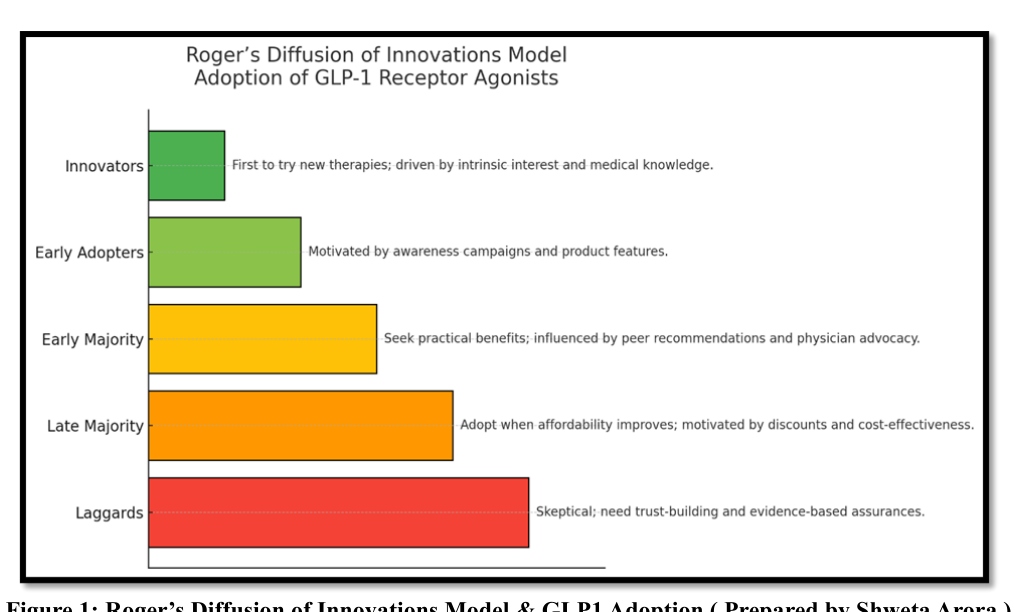
The adoption of GLP-1 receptor agonists in the Indian market can be analyzed through Roger’s Diffusion of Innovations model, which categorizes individuals into five groups:
- Innovators: First to try new therapies, driven by intrinsic interest and medical knowledge.
- Early Adopters: Highly motivated by awareness campaigns and product features.
- Early Majority: Seek practical benefits, influenced by peer recommendations and physician advocacy.
- Late Majority: Adopt therapies when affordability improves, motivated by discounts and cost-effective strategies.
- Laggards: Skeptical about new therapies, requiring trust-building and evidence-based assurance.
II. Review
Introduction
The rising prevalence of obesity and diabetes worldwide has underscored the urgent need for effective, sustainable therapies. (Abdul Basith Khan, M., Hashim, M. J., King, J. K., Govender, R. D., Mustafa, H., & Al Kaabi, J. (2020).) Glucagon-like peptide 1 receptor agonists (GLP-1RAs) have emerged as groundbreaking agents, shifting the treatment paradigm by delivering unprecedented placebo-adjusted weight loss of 12% to 18%, surpassing all prior pharmacologic therapies. (Berman, C., Vidmar, A. P., & Chao, L. C. (2023).) Despite their clinical success, barriers such as high costs, side effects, and limited access persist, complicating their broader adoption. (Baryakova, T. H., Pogostin, B. H., Langer, R., & McHugh, K. J. (2023).)
Global Impact and Market Trends
From 2021 to 2023, the stock valuation of major GLP-1RA manufacturers, Novo Nordisk and Eli Lilly, more than tripled, reflecting the immense interest and market potential of these therapies. (Goldman Sachs. (n.d.). Together, their combined valuation exceeds $1 trillion, emphasizing their dominance in the pharmaceutical landscape. However, the U.S. list prices for GLP-1RAs, ranging from $12,000 to $16,000 annually, pose significant financial challenges. Even with negotiated discounts, costs exceed $6,500 per year, limiting accessibility for eligible populations. If universally prescribed to all eligible U.S. adults, annual expenses could reach $600 billion—comparable to the nation's entire prescription drug expenditure. (
Mechanisms of Action and Clinical Evolution
GLP-1RAs function by targeting GLP-1 receptors widely distributed within the central nervous system (CNS), reducing food intake, and promoting satiety. Initial iterations, such as exenatide (introduced in 2005), faced challenges like nausea and vomiting, limiting adherence. However, advances such as gradual dose escalation and newer formulations have mitigated these issues, setting the stage for therapies like semaglutide and tirzepatide to achieve weight loss nearing 20%. (Rodriguez, P. J., Cartwright, B. M. G., Gratzl, S., Brar, R., Baker, C., Gluckman, T. J., & Stucky, N. L. (2024).)
Emerging evidence suggests potential efficacy in managing genetically driven obesity, broadening the therapeutic scope. However, long-term safety data, particularly for combination therapies, remain limited and necessitate further validation through randomized controlled trials like the SELECT study.
Beyond Weight Loss: Comprehensive Benefits
The benefits of GLP-1RAs extend beyond weight loss, addressing critical endpoints such as:
Improved mobility and quality of life
Reduced incidence of sleep apnea, arthritis, and gestational diabetes
Enhanced reproductive outcomes.
Mitigation of hepatosteatosis and blood pressure abnormalities (Popoviciu, M. S., Păduraru, L., Yahya, G., Metwally, K., & Cavalu, S. (2023).)
These multifaceted outcomes reinforce the role of GLP-1RAs as holistic therapeutic agents for metabolic disorders.
Diffusion of Innovation (DOI) Theory and Adoption Trends
E.M. Rogers’ Diffusion of Innovation theory provides a structured framework for understanding the adoption of GLP-1RAs. (García-Avilés, J. A. (2020).) The theory categorizes adopters into five groups, each requiring tailored strategies:
- Innovators: Venturesome and willing to try new ideas with minimal persuasion.
- Early Adopters: Opinion leaders who influence peers and embrace innovations readily.
- Early Majority: Require evidence of effectiveness before adoption.
- Late Majority: Skeptical and adopt after broader societal validation.
- Laggards: Conservative, bound by tradition, and resistant to change.
In the context of GLP-1RAs, early adopters drive initial uptake, influenced by awareness and education. Late adopters and laggards present challenges due to cost concerns, skepticism, and reliance on traditional therapies.
Barriers to Adoption
Key challenges impeding the widespread use of GLP-1RAs include:
Economic Constraints:
High costs limit accessibility, particularly in low- and middle-income countries.
Side Effects: Nausea, vomiting, and gastrointestinal discomfort affect adherence.
Awareness Gaps: Limited understanding of the multifaceted benefits among patients and healthcare providers.
Patent Protections: Extensive patent portfolios delay the introduction of affordable generics, maintaining high prices.
Strategies for Promoting Adoption
To address these barriers, targeted strategies are required:
For Innovators and Early Adopters: Provide detailed educational resources and evidence of clinical success.
For Early Majority: Share success stories, clinical outcomes, and peer recommendations.
For Late Majority: Emphasize affordability through subsidies, discounts, and cost-effective formulations.
For Laggards: Build trust through community engagement, long-term efficacy data, and peer influence.
Future Research Directions
While GLP-1RAs show immense promise, further research is critical to overcoming existing limitations:
- Long-term Safety: Studies like SELECT are essential to validate the safety and efficacy of combination therapies.
- Cost Reduction: Evaluate the economic impact of generics, biosimilars, and policy-driven subsidies.
- Genetic Obesity: Expand research into the efficacy of GLP-1RAs for individuals with genetic predispositions.
- Comparative Studies: Investigate outcomes of GLP-1RAs versus bariatric surgery in obesity management.
- Lifestyle Integration: Explore the synergistic effects of GLP-1RAs combined with diet and exercise.
- Real-world Data: Analyze adherence, persistence, and outcomes in diverse populations.
III. Results
Demographic and Lifestyle Overview
Sample Characteristics:
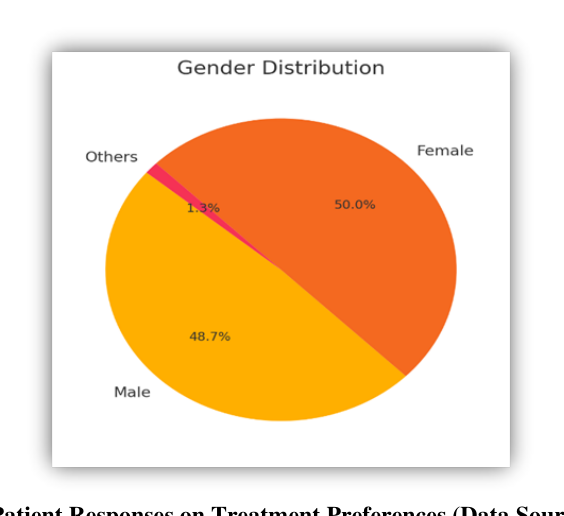
- Balanced gender representation: 50% female, 48.7% male.
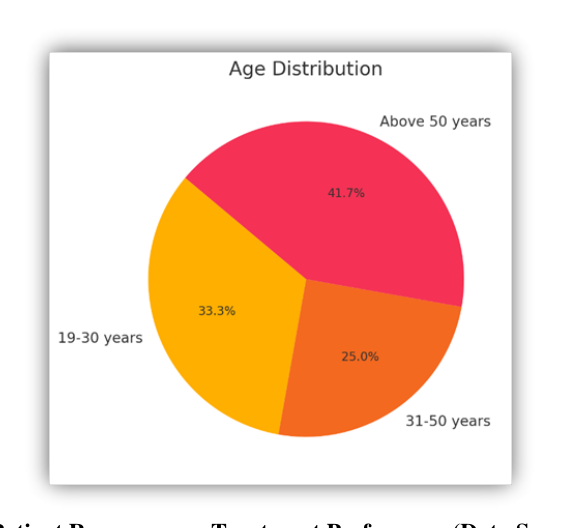
- Age distribution: Majority aged 19-30 years (33.3%).
Education and Occupation:
- Urban representation: 71.3%.
- Educated population: 54.7% graduates.
- Main occupations: Private-sector employees (36.3%) and students (23%).
Physical Activity:
- Moderately active: 49.3%.
- Sedentary lifestyle: 39.3%.
- Regular activities: Yoga or walking (50%).
Health Behaviors
Glucose Monitoring:
- Irregular monitoring: 39.5%.
- Regular monitoring: 19.1%.
- (Need for increased awareness on regular monitoring.)
Weight Management:
- Regular monitoring: 40.6%.
- Obesity prevalence: 58.2%.
Perceptions and Attitudes
Urbanization Risks:
- 61.7% link urbanization with diabetes in youth.
- 56.2% view females as more vulnerable to obesity and diabetes.
Digital Health Awareness:
- 72.1% support social media for awareness campaigns.
- (Opportunity for digital health campaigns.)
GLP-1 Therapy Awareness and Adoption
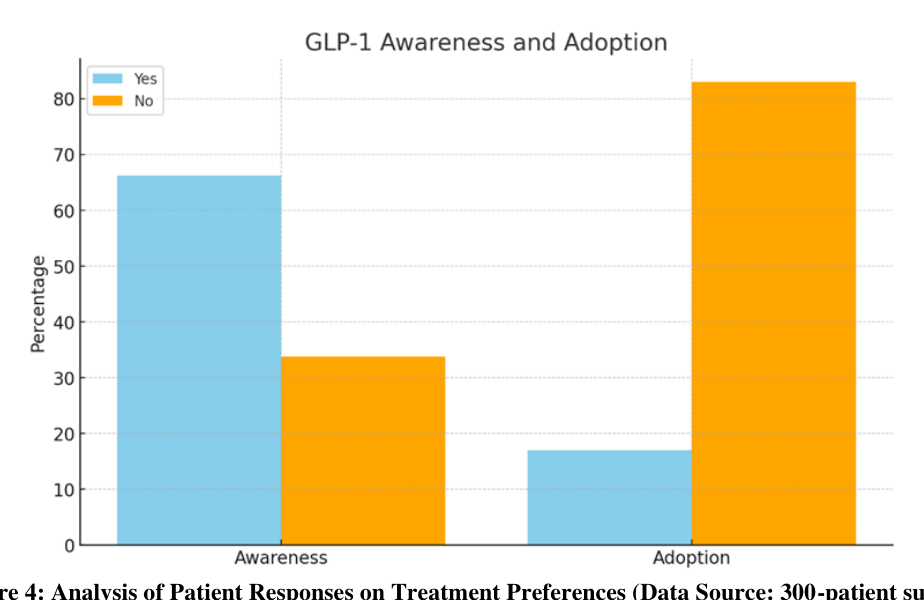
Awareness: Limited, with 66.2% unaware of GLP-1 therapy.
Adoption: Only 17% are considering its use.
(Highlights an education gap.)
Challenges and Treatment Preferences
Medication Concerns:
o High costs and side effects.
Openness to New Treatments:
o 77.3% are open to drugs offering cardiovascular and weight management benefits.
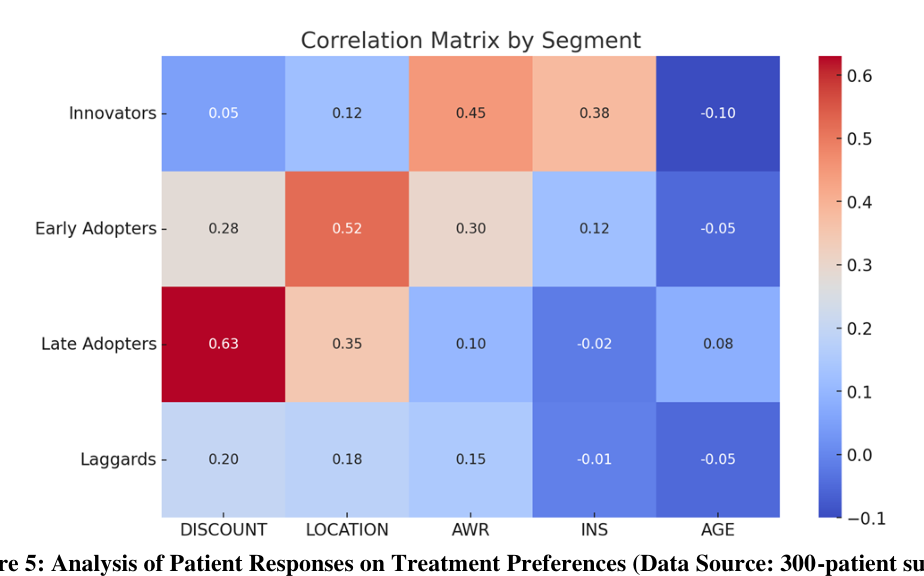
Key Correlations (Python Structural Equation Model)
- Significant Positive Correlations:
- Discounts: Estimate: 0.518, P-value: 0.0015.
- Other Benefits: Estimate: 0.572, P-value: 0.0100.
- Expectations: Estimate: 1.026, P-value: 0.0016.
- Negative Correlation:
- Awareness vs. Adoption: Estimate: -0.990, P-value: 0.0388.
Segment Analysis
Step 1: Identifying Segments
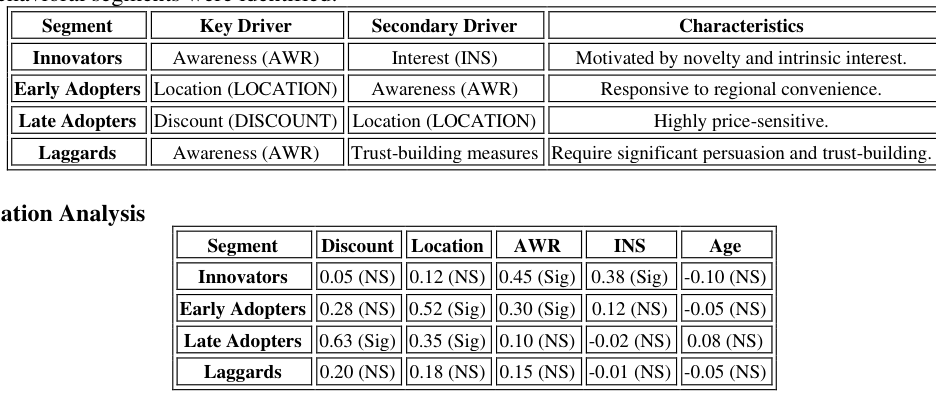
Four behavioral segments were identified:
Strategic Insights
- Innovators:
- Drivers: Awareness (AWR) and Interest (INS).
- Strategy: Highlight innovative features; launch awareness campaigns.
- Early Adopters:
- Drivers: Location (LOCATION) and Awareness (AWR).
- Strategy: Focus on convenience and targeted promotions.
- Late Adopters:
- Drivers: Discounts (DISCOUNT) and Location (LOCATION).
- Strategy: Emphasize affordability with localized campaigns.
- Laggards:
- Drivers: Weak Awareness (AWR).
- Strategy: Build trust and highlight long-term benefits.
IV. Discussion
The findings of this study underscore the multifaceted challenges in adopting GLP-1 receptor agonists for diabetes and obesity management in India. Despite their clinical efficacy in weight loss and glycemic control, several barriers restrict their widespread utilization.
Economic Constraints
Economic barriers, notably the high cost of therapy, are a primary hindrance to adoption. For most Indian patients, the monthly cost of GLP-1 receptor agonists (₹10,000–₹20,000) is prohibitive, especially given the out- of-pocket expenditure predominant in the healthcare system. Insurance coverage for such advanced therapies remains minimal. This disparity highlights the need for government interventions, including subsidies or incorporation into national healthcare schemes like Ayushman Bharat. The potential introduction of generics or biosimilars in the future could alleviate these financial barriers, making these therapies accessible to a larger population.
Awareness and Education
The limited awareness (66.2%) among patients and healthcare providers about the benefits and mechanisms of GLP-1 receptor agonists is a significant challenge. This lack of knowledge extends to healthcare professionals in rural and semi-urban areas, where adoption rates are even lower. Educational initiatives targeting both patients and providers can bridge this gap. Digital health campaigns, supported by 72.1% of survey respondents, present a viable avenue for disseminating information and addressing misconceptions.
Lifestyle and Behavioral Challenges
India’s urbanization and the resultant shift toward sedentary lifestyles have exacerbated the obesity epidemic. The survey revealed that 39.3% of participants lead sedentary lives, with poor dietary choices further compounding the issue. Gender disparities were also evident, with women perceived as more vulnerable to obesity and diabetes. These findings suggest the necessity of gender-sensitive interventions and comprehensive lifestyle modification programs to complement pharmacological therapies.
Patient Perceptions and Preferences
The survey revealed that 77.3% of respondents were open to adopting therapies offering cardiovascular and weight-management benefits, indicating a latent demand for effective treatments. However, concerns about side effects such as nausea, vomiting, and gastrointestinal discomfort, common in early GLP-1 formulations, deterred adoption. Advancements in therapy design, including gradual dose escalation and improved formulations, can address these concerns and improve patient adherence.
Segment-Specific Strategies
Applying Roger’s Diffusion of Innovations model, the study identifies tailored strategies for each adopter category:
- Innovators and Early Adopters: Awareness campaigns emphasizing the novelty and proven efficacy of GLP-1 receptor agonists.
- Early Majority: Peer advocacy and success stories to build trust and demonstrate practical benefits.
- Late Majority and Laggards: Cost-effective solutions, discounts, and long-term safety data to address affordability and skepticism.
Future Research Directions
Several research priorities emerge from this study:
Long-term Safety: Ongoing trials, such as SELECT, are crucial for validating the long-term safety and efficacy of GLP-1 therapies, particularly in combination with other agents.
Cost-Effectiveness: Studies examining the economic impact of introducing biosimilars or policy-driven subsidies can provide insights into improving accessibility.
Real-World Evidence: Data from diverse populations in India, including rural and underserved regions, can help refine strategies for adoption.
Comparative Studies: Further exploration of GLP-1 receptor agonists versus alternative treatments like bariatric surgery can guide clinical decision-making.
V. Conclusion
The adoption of GLP-1 receptor agonists in India is still in its nascent stages, with economic, educational, and behavioral barriers impeding widespread utilization. This study provides a comprehensive framework for addressing these challenges through targeted strategies tailored to different adopter segments. Key insights include the importance of cost reduction, awareness campaigns, and lifestyle interventions as critical enablers for adoption.
Moreover, the potential of GLP-1 receptor agonists to revolutionize diabetes and obesity management cannot be overstated. Their ability to provide comprehensive benefits—including cardiovascular protection, weight loss, and metabolic improvements—positions them as a cornerstone of future therapeutic strategies.
However, realizing this potential requires coordinated efforts from policymakers, healthcare providers, and the pharmaceutical industry.
By addressing economic disparities, improving education, and leveraging digital health platforms, GLP-1 receptor agonists can transition from a niche therapy to a mainstream solution. This shift will not only enhance individual health outcomes but also contribute to reducing the broader healthcare burden of diabetes and obesity in India. Future research, combined with strategic policy interventions, holds the key to overcoming existing limitations and unlocking the full potential of this groundbreaking class of therapies.
Ethical Considerations
In conducting and reporting the research on the early adoption of GLP-1 receptor agonists in India, we adhered to ethical guidelines to ensure integrity, respect, and responsibility towards the participants and the wider community. Key ethical considerations included:
- Informed Consent: All participants in the 300-patient survey were provided with detailed information about the study's purpose, their role, and the use of their responses. Consent was obtained prior to participation, ensuring that they were aware of their right to withdraw at any time without any consequence.
- Confidentiality and Anonymity: Measures were taken to protect the identity and personal information of the participants. Data was anonymized before analysis to prevent any potential identification.
- Transparency and Honesty: The research findings are presented honestly without fabrication, falsification, or inappropriate data manipulation. The limitations and potential biases of the study are openly discussed in the manuscript to provide a clear and honest interpretation of the data.
- Avoidance of Harm: The study design considered the psychological and social implications of the survey questions, ensuring that no harm was caused to the participants. The potential impact of the questions was carefully evaluated, and support was offered to participants who might have been affected by the topics discussed.
- Fairness and Equality: The study ensured that all participants were treated equally, with no discrimination based on gender, age, socioeconomic status, or any other characteristic. The selection of participants aimed to reflect a diverse demographic to generalize the findings across the population effectively.
Acknowledgements
We extend our gratitude to all the participants who generously contributed their time and insights to this study. We also thank the medical and research teams for their support in designing and conducting the survey, especially the contributions from the following individuals and institutions:
- Dr. Balakrishna Grandhi and Dr. Shital Vakhariya for their expert guidance and critical review of the study design and manuscript.
- Healthcare Providers across various Indian regions who assisted in participant recruitment and provided valuable insights into the local healthcare contexts that shape diabetes and obesity management.
This research was supported by grants from [Institution or Organization Name], which enabled the comprehensive analysis and dissemination of the findings. We acknowledge their financial and logistic support that was crucial to the success of this study.
References
[1] Pradeepa, Rajendra, And Viswanathan Mohan. "Epidemiology Of Type 2 Diabetes In India." Indian Journal Of Ophthalmology 69.11 (2021): 2932-2938.
[2] Hamed, K., Alosaimi, M. N., Ali, B. A., Alghamdi, A., Alkhashi, T., Alkhaldi, S. S., ... & Dighriri, I. M. (2024).
[3] Goel, A., Reddy, S., & Goel, P. (2024). Causes, Consequences, And Preventive Strategies For Childhood Obesity: A Narrative Review. Cureus, 16(7), E64985.
[4] Hamed, K., Alosaimi, M. N., Ali, B. A., Alghamdi, A., Alkhashi, T., Alkhaldi, S. S., ... & Dighriri, I. M. (2024). Glucagon-Like Peptide-1 (Glp-1) Receptor Agonists: Exploring Their Impact On Diabetes, Obesity, And Cardiovascular Health Through A Comprehensive Literature Review. Cureus, 16(9).
[5] Collins, L., & Costello, R. A. (2019). Glucagon-Like Peptide-1 Receptor Agonists.
[6] Arora, S., Grandhi, B., & Vakhariya, S. (2024). Navigating The Complex Landscape Of Glp-1 Receptor Agonists: Barriers, Opportunities, And Future Directions In The Indian Pharmaceutical Market. World Journal Of Biology Pharmacy And Health Sciences, 18(3), 067-073.
[7] Bell, D. (2024, September 3). Unpacking The High Cost Of Glp-1 Drugs. Pharmaceutical Commerce.
[8] Allen, J., Berry, D., Cook, F., Hume, A., Rouce, R., Srirangam, A., ... & Mccombs, C. (2023). Medicaid Coverage Practices For Approved Gene And Cell Therapies: Existing Barriers And Proposed Policy Solutions. Molecular Therapy Methods & Clinical Development, 29, 513-521.
[9] Levy, H., & Meltzer, D. (2008). The Impact Of Health Insurance On Health. Annu. Rev. Public Health, 29(1), 399-409.
[10] Gupta, S., & Bansal, S. (2020). Effect Of Urbanization, Sedentary Lifestyle And Consumption Pattern On Obesity: An Evidence From India. Sedentary Lifestyle And Consumption Pattern On Obesity: An Evidence From India (December 2, 2020).
[11] Pfoh, E. R., Linfield, D., Speaker, S. L., Roufael, J. S., Yan, C., Misra-Hebert, A. D., & Rothberg, M. B. (2022). Patient Perspectives On Self-Monitoring Of Blood Glucose When Not Using Insulin: A Cross-Sectional Survey. Journal Of General Internal Medicine, 37(7), 1673-1679.
[12] Abdul Basith Khan, M., Hashim, M. J., King, J. K., Govender, R. D., Mustafa, H., & Al Kaabi, J. (2020). Epidemiology Of Type 2 Diabetes—Global Burden Of Disease And Forecasted Trends. Journal Of Epidemiology And Global Health, 10(1), 107-111.
[13] Berman, C., Vidmar, A. P., & Chao, L. C. (2023). Glucagon-Like Peptide-1 Receptor Agonists For The Treatment Of Type 2 Diabetes In Youth. Touchreviews In Endocrinology, 19(1), 38.
[14] Baryakova, T. H., Pogostin, B. H., Langer, R., & Mchugh, K. J. (2023). Overcoming Barriers To Patient Adherence: The Case For Developing Innovative Drug Delivery Systems. Nature Reviews Drug Discovery, 22(5), 387-409.
[15] Pharmaceutical Executive. (N.D.). With The Rise Of Glp-1 Agonists For Treating Obesity, Will Access Challenges Prevent Progress?
[16] Rodriguez, P. J., Cartwright, B. M. G., Gratzl, S., Brar, R., Baker, C., Gluckman, T. J., & Stucky, N. L. (2024). Semaglutide Vs Tirzepatide For Weight Loss In Adults With Overweight Or Obesity. Jama Internal Medicine, 184(9), 1056-1064.
[17] Popoviciu, M. S., Păduraru, L., Yahya, G., Metwally, K., & Cavalu, S. (2023). Emerging Role Of Glp-1 Agonists In Obesity: A Comprehensive Review Of Randomised Controlled Trials. International Journal Of Molecular Sciences, 24(13), 10449.
[18] García-Avilés, J. A. (2020). Diffusion Of Innovation. The International Encyclopedia Of Media Psychology, 1(8).