Abstract
Purpose — The purpose of this paper is twofold: first is to map and analyse prominent contributions, current dynamics, patterns, gaps and research prospects in the field of workplace incivility (WI); second is to provide a coherent theoretical research framework for future research.
Design/methodology/approach — This study adopts a two-step analysis approach by combining bibliometric analysis and systematic literature review to explore the research topic of WI, besides, using multiple methodologies including bibliometric, network and content analyses.
Findings — This study found that L. M. Cortina and M. S. Hershcovis are the top two most influential authors among all authors in the sample publications. Journal of Occupational Health Psychology is one of the top-ranking journal that often publishes this topic of articles. USA and The Bowling Green State University are the most influential country and institutions, respectively. Besides, burnout and retention are also common keywords were identified based on keywords co-occurrence map, showing that WI has a major impact on burnout and employee retention. Based on the above analysis, this paper constructed a theoretical research framework of WI.
Research limitations/implications — This paper only draw data from one database—Scopus—which cannot provide broad coverage of the research topic. WI research trends and trajectories may be assessed to enable academics and practitioners better understand the current and future trends and research directions. Future studies in this field might use the findings as a starting point to highlight the nature of the topic.
Originality/value — This study is the first to use an systematic literature review (SLR) to evaluate the association between WI and other organizational behaviour. The study contributions are fourfold, extending the work and overcoming the methodologies of prior research that only focussed on characteristics of incivility in nursing. In addition, this paper presents an in-depth analysis of this topic and provides a comprehensive theoretical research framework for future study.
Keywords — Workplace incivility, Deviant behaviour, Bibliometric analysis, Systematic review, Network analysis, Content analysis
Paper type — Conceptual paper
1. Introduction: research aim and contextualization
Over the last two decades, organizational research has paid more attention to workplace incivility (WI) (Yao et al., 2022). Workplace incivility is defined as low-intensity deviant conduct with an ambiguous goal of harming or negatively affecting the target (Andersson and Pearson, 1999). It demonstrates a lack of regard for others and is often classified as disagreeable and discourteous. The loss of civility, which is expected to be a desirable quality of work, is referred to as incivility (Itzkovich, 2016). Such conduct is clearly in breach of workplace norms that call for civilized behaviour and mutual respect on the job (Andersson and Pearson, 1999). Complex behaviour is a characteristic of humans who are social beings that build emotions in every social interaction. The workplace is a formal social setting in which dignity, mutual respect, respect for others and civil behaviour contribute to the establishment of formal and informal groups and teams. But according to Park et al. (2022), incivility is pervasive in the workplace. Historically, while researching interpersonal mistreatment in the workplace, Cortina (2001) discovered that one-third of the highest ranking employees initiated uncivil behaviour. According to Miner et al. (2017), incivility is distinct, since it has no evident intent to hurt, and it is possibly noticeable to the instigator of the incivility, but ambiguous to the target, as individuals see information and behaviours differently (Themistocleous, 2018). According to De Castro et al. (2002), incivility causes psychological distress and acts as a barrier to organizational progress. Incivility and bullying, according to the American Nurses Association (ANA), are viruses that have penetrated all settings. Taking the healthcare industry into consideration, WI contributes to workplace impairment for nurses, according to Schilpzand (2016) and Gültaç (2019). Just like termite, incivility eats the organization slowly but badly. The seriousness of incivility and its acts needs attention. Research on incivility has been exponentially increasing among contemporary scholars in many growing fields of business research. Thousands of new articles, papers and other documents are released every day. The sheer volume of information and time requirements for reviewing and evaluating new material, including whether any particular study is published in a credible source, make it more challenging (even for experts in their respective professions) to keep up with new advancements. It can be challenging for researchers to find pertinent studies on a given subject, to evaluate the strength and accuracy of the available data and to synthesis the findings. To develop an area of knowledge, it can be difficult to decide what evidence to rely on (or not rely on) for purposes of future study and publications. To overcome these limitations and assist with various aspects of the research process, such as establishing a context and defining a research problem, seeking theoretical support, rationalizing a problem and developing new lines of inquiry, separating what has been done from what needs to be done, identifying the primary findings of (and methodologies used in prior studies), avoiding fruitless research, systematic literature review and bibliometric analysis can be used. Hence, the primary aim of this research is to identify, analyse, interrelate and map all the prominent extant contributions to the subject, thus comprehensively presenting its current dynamics, patterns, gaps and research prospects. Specifically, we analysed 479 papers, written by 1,090 authors, published in 221 academic journals between 1999 and 2022, and listed in the Scopus database. The methodologies used included bibliometric, network and content analyses. The findings refine, direct and leverage future research on the subject in diverse organizational, geographic and industry contexts, and they further present executive implications and recommendations for industry application. Moreover, the study ties together other active relevant and peripheral components of WI, which will aid future studies to link the subject in an interdisciplinary manner. We have summarized the work done to date using the Scopus database based on a comprehensive review of pertinent literature on WI and to recognize the trend of WI from its inception. The current study’s objective is to aggregate the accomplishments of scholars who have previously focussed on WI. After analysing the research produced by numerous writers, we determined that there is still sufficient room for advancement in the domain of WI across all sectors. With this in mind, we attempted to summarize the current trends in WI. The current effort contributes to a more systematic orientation for future research in this area. Our study is the first to use an SLR to evaluate the association between WI and other organizational behaviour. We did this by analysing the extensive and detailed data that emerged from the SLR using bibliometric analysis and network visualization. The study contributions are fourfold, extending the work of Schilpzand et al. (2016) and overcoming the methodologies of prior research that only focussed on characteristics of incivility in nursing. First, the study uses bibliometric analysis, a novel methodological approach that combines quantitative and qualitative data, together with the SLR. We were able to study both quantitative and qualitative data as a result, which advanced our knowledge of the effects of WI. Additionally, it enabled us to organize the already available literature around conceptualizations, theoretical frameworks and available scales for assessing WI. In addition to providing a thorough overview of how the research is structured in this field, the study offers demographic information on the available literature. Third, by presenting publication patterns, the study enables researchers to throw light on the subject of uncivil behaviour and, over time, reveal the shady side of organizations.
2. Theoretical foundation
2.1 Research significance and scale development
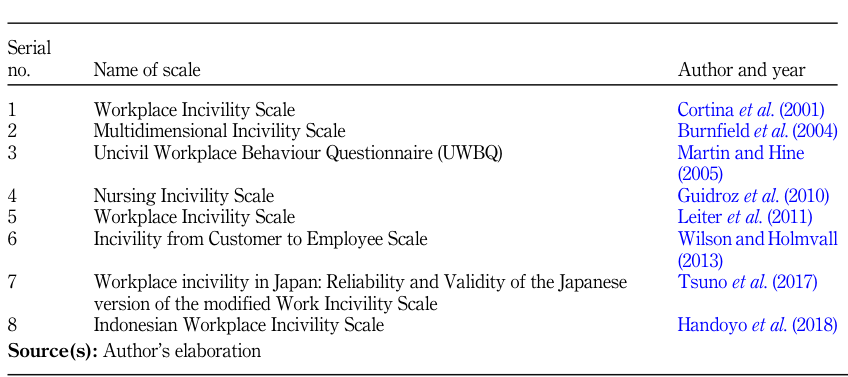
While visible forms of deviant behaviour, bullying, counterproductive behaviour, harassment and aggression in the workplace are more direct and have garnered the research community’s attention, silent negative workplace acts, such as inappropriate gestures, commenting and rude reactions or actions, are equally detrimental to an individual’s mental and physical health. Andersson and Pearson (1999) examined this issue for the first time in their paper “Tit for tat? The spiraling effect of workplace incivility,” and they advanced the notion of WI and the theory of the WI spiral in the Academy of Management Review. Cortina et al. (2001) created the first measure to quantify WI. Table 1 shows various other scales developed in relation to WI.
Cortina et al.’s (2001) Workplace Incivility Scale was unidimensional, in contrast to Martin and Hine (2005) multidimensional Uncivil Workplace Behaviour Questionnaire (UWBQ) with four variables. Handoyo et al. (2018) added a fifth category, “inconsiderate behaviour,” to the Indonesian Workplace Incivility Scale. The aforementioned scales have consequences for future scholars and practitioners. Researchers throughout the world began examining the prevalence of incivility in several industries, the most prominent of which is nursing. Maddineshat et al. (2021) discovered that professional incompetence and workplace discrimination are the root causes of visible disruptive behaviours of incivility in the emergency department. According to and Carter (1998), WI is a multi-party interaction event that can have a negative effect on nursing performance. Additionally, Cha and Sung (2020) stated that WI results in psychological discomfort, which has a detrimental effect on job satisfaction, job withdrawal and career salience, which further reduces employees’ creativity (Serravalle et al., 2019). Zhou et al. (2019) investigated the mediating and moderating effects of burnout on the link between workplace incivility and work–family conflict. Chatterjee et al. (2021) quoted that incivility results in knowledge hiding when knowledge is crucial for any organization. Raza et al. (2020) investigated the prevalence of WI in the tourism industry via the lens of the Islamic work ethic. Miranda et al. (2020) explored employees’ responses to observed inactivity using the “appraisal model of self-consciousness.” Additionally, how the answer relates to feelings of guilt and shame. Young et al. (2021) identified stigma consciousness as a predictor of WI and demonstrated how managerial techniques might assist to diminish stigmas, hence decreasing incivility. Guo and Qiu (2019) determined that WI exists in academia through their study of Chinese institutions. They also discovered that WI has a detrimental effect on employee quality of organizational citizenship.
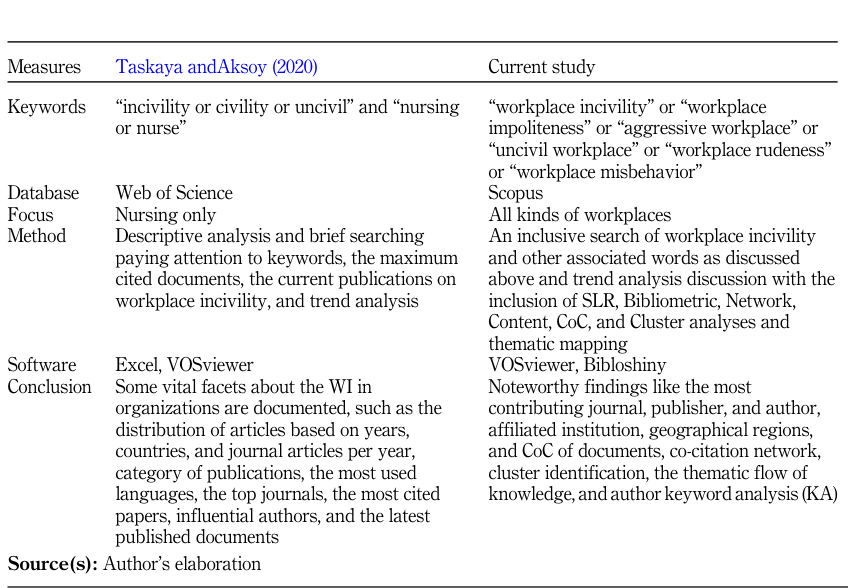
Andersson and Pearson (1999) discussed the “incivility spiral” and the “snowball effect,” in which incivility is compared to the initial sowing of seeds that, when nurtured with sun, water and fertilizers on a regular basis, can produce a good yield, that is, the spread of mistreatment within an organization. In other words, WI is progressive in nature, resulting in an upward spiral of unfortunate acts, events and behaviours that foster dislike and hatred among individuals, eventually resulting in a negative work environment that reaches its zenith (tipping point), at which no further tolerance is possible. Even a single uncivil act or move might incite aggression and violence in an organization. Recognizing the sensitivity and regularity of such conduct in practice in all industries and not just nursing, the purpose of this study was to examine the trend of WI identified in previous research. During the process, we came across two previous works of literature summarizing the subject. Taşkaya and Aksoy (2020) conducted a bibliometric analysis of 269 articles on nursing incivility using the Web of Science Database. Table 2 compares that study to that of Taşkaya and Aksoy (2020). Taking into account the efforts completed to date, numerous studies demonstrating the prevalence of incivility have been conducted in a variety of areas, including hospitality, academia and tourism. This article compiles prior research on WI from a variety of other areas, not just nursing. The research methodology used in this study is a synthesis and combination of bibliometric analysis, systematic literature review and network analysis, which resulted in the structured collection of pertinent prior work and literature. This study makes an attempt to give a more presentable mind map of previous research in a prepared style in order to make it more accessible and intelligible. We attempted to cover the recent trend of incivility fully in this paper by examining the most significant documents in the field of incivility, documents with a high impact, the top journals, publishing shifts, the most referenced documents and the developing topics in the field of incivility. This study will aid practitioners in gaining a better understanding of the origins and repercussions of WI. Following a review of the extant literature to identify gaps and areas of contribution, the research has also, procedurally, set a number of additional objectives. Specifically, this research aims to (1) ascertain the current pattern and direction of publications; (2) ascertain the contribution of established researchers and their collaborations; (3) identify the most authoritative journals in the topic of WI; (4) distinguish the publications that bear the greatest influence, through their citation count; and (5) identify the most widely, frequently used relevant terms in extant research.
3. Methodology
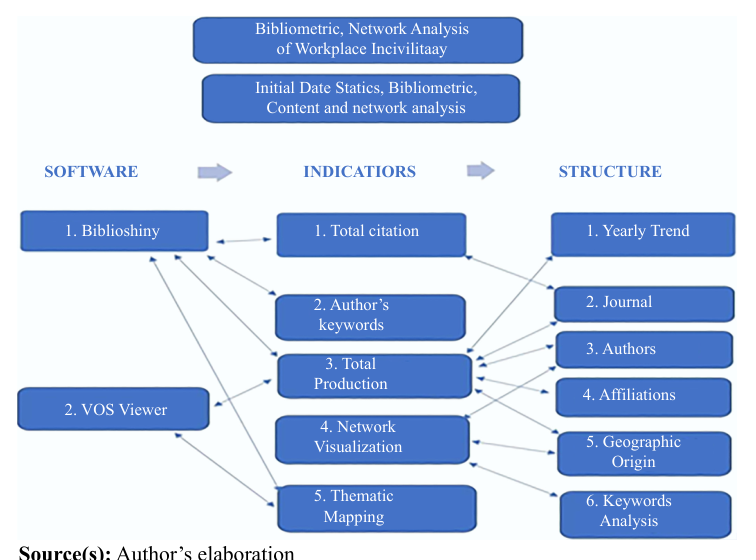
To study the literature on WI, the paper presents the bibliometric analysis and systematic literature review with the assistance of tools like co-occurrence, citations, co-authorship and keywords. To present the bibliometric analysis, the researcher used biblioshiny (Aria and Cuccurullo, 2017; Chaudhuri et al., 2020) and VOSviewer software because these applications offer a web interface and can convert and gather data from multiple databases like Scopus, Web of Science, PubMed, Dimension. Three primary steps were taken for the wide ranging systematic literature review, namely collecting the data, which consisted of loading and converting the data; analysis, which included creating the network and descriptive matrices (bibliographic coupling, collaboration, co-occurrence, and co-citation); and visualization, or mapping, of the results. The proposed research tries to fill the research gaps and accomplish the specified objectives of bibliometric analysis on the existing literature and analyses the research articles using a systematic literature review. The structure of the research is designed so that the first part is a basic introduction about WI, and the following parts cover the bibliometric analysis and a systematic literature review. Finally, the last section is the conclusion followed by limitations and suggestions for future research.
3.1 Defining the appropriate terms for research
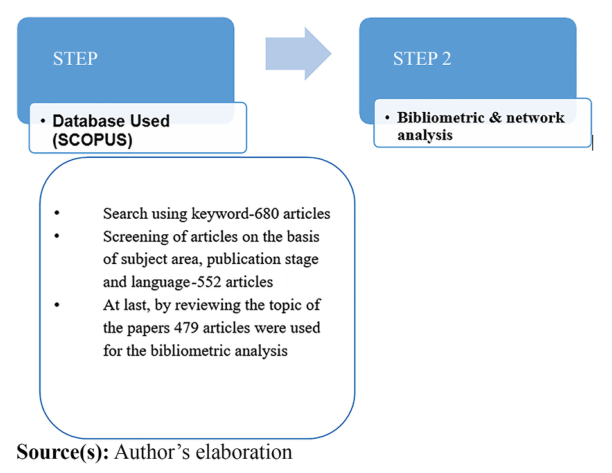
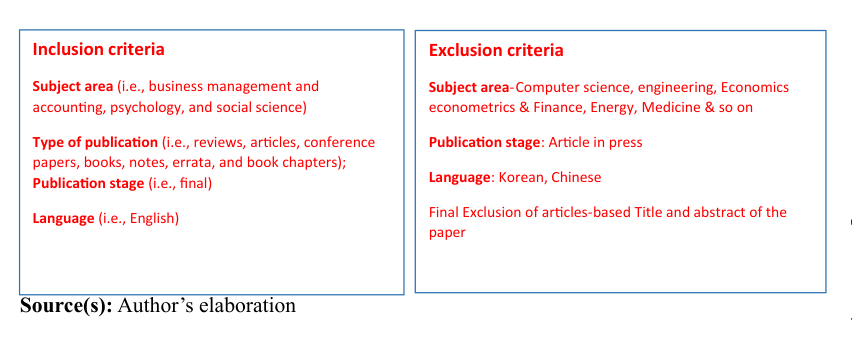
The current paper reviewed the subject of WI. The keywords used include “workplace incivility,” “workplace impoliteness,” “aggressive workplace,” “uncivil workplace,” “workplace rudeness,” “workplace misbehavior.” The Scopus data were used as it includes both the ISI and Scopus indexed and ranked articles (Oakleaf, 2009). Following this, a total of 680 articles were retrieved that were published between 1999 and 2022. Further, the articles were distilled down to 479 articles by screening on the basis of subject area (business management and accounting, psychology and social science), language (English), publication stage (final) and by reviewing the titles and abstracts of the articles. The research considers all types of documents: reviews, research articles, conference papers, books, notes, erratum and book chapters. To include the title, abstract, keywords, references and affiliation, the search results were downloaded in the CSV format. Figures 1 and 2 show the procedure. To retrieve required data, some set criteria were used (see Figure 3).
3.2 Preliminary data statistics
In the current study, 479 articles were scrutinized for details such as the type of publications, and the most productive journals. Table 3 provides the data including the different types of documents, timespan, publications, sources, citations and authors. Here, it can be observed that the articles were published between 1999 and 2022. A total of 479 documents were used for the current study: 443 articles, six conference papers and thirty reviews. These articles were published in 221 sources. The articles used a total of 2006 keywords. It is also identified
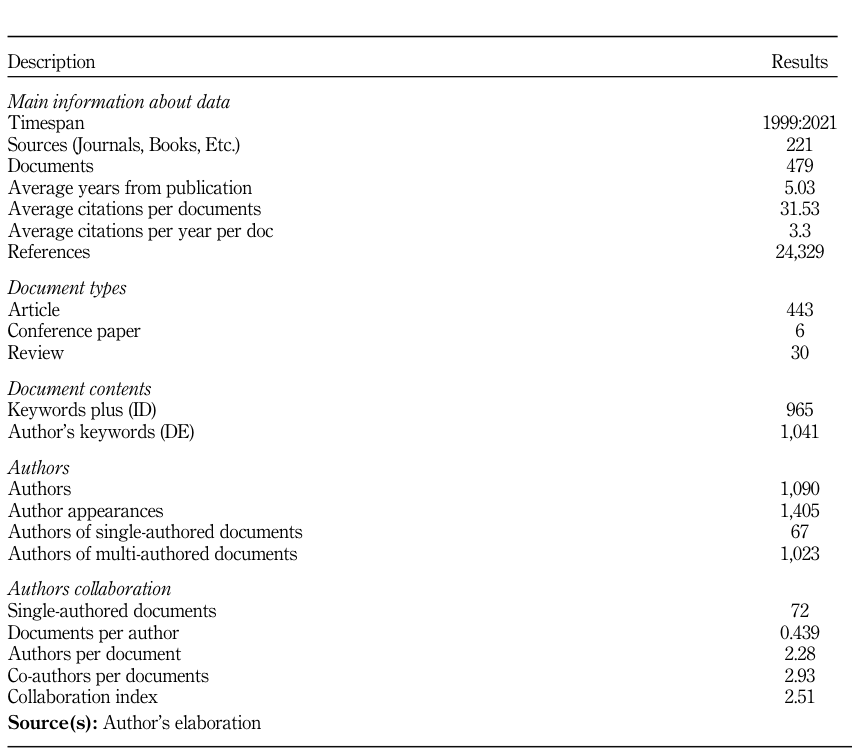
that the articles were written by a total of 1,090 authors, and 67 were single-authored documents and 1,023 were written by multiple authors. The collaboration index was found to be 2.51.
3.3 Annual publication analysis
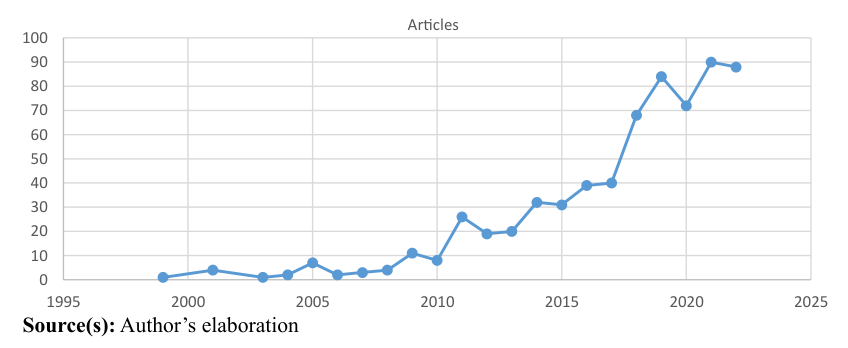
Figure 4 depicts the annual number of articles published in this field of WI from 1999 until 2022. The trend shows the fluctuation in the number of articles in the field. In 2019 and 2020, the production of the articles was highest, with 84 and 72, respectively. The decade from 2010 to 2020 showed a great hike in the number of articles published. As of 2011, there had been only 43 articles published, but after 2011, the number of studies published has increased. It is clear from the chart that in the years 2022 and 2021, WI caught the maximum interest of the researchers, as the number of articles rose from 90 to 88. This shows that research interest in the concept of the workplace and employee incivility is growing.
3.4 Analysis of author impact
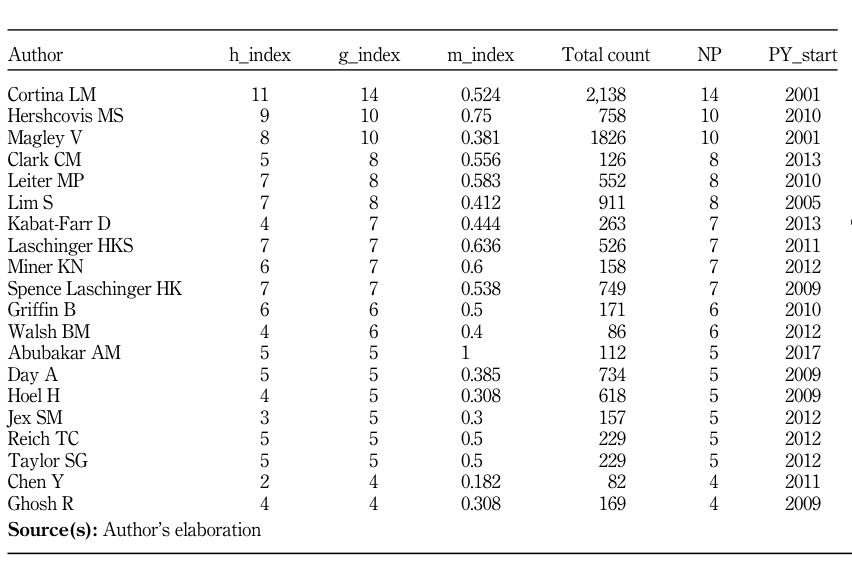
As per the objective of the study, Table 4 shows the impact factors of the top 10 authors, along with their total citations and years of publication. The author L. M. Cortina, with 14 articles on incivility, has had the maximum impact, with h index 5 11, g index 5 14, along with the total citations as 2,138. M. S. Hershcovis, who has published 10 articles, holds the second position with an impact factor of h index 5 11 and a total of 758 citations. This table demonstrates and analyses the impact of the authors in this field and also points out that the impact factor of the authors somehow depends upon the number of publications. Figure 4 shows the greatest contributors in the field of WI researches and their nexus of either working or citing each other. 3.4.1 Bibliometric analysis. The term “bibliometric” denotes bibliographic analysis by means of statistics and mathematics (Pritchard, 1969). Bibliometric analysis is used to assess scientific publications and examine the impact factors and citations, collaboration patterns, the ways for scientific publications and to describe the efficiency of scientific works (Padros- Cuxart et al., 2016). With the advancement of statistics, technology and time, various software packages have been developed for bibliometrics analysis. This current bibliometric analysis uses biblioshiny, which is an open-source application for bibliometrics analysis for the non- coder (Aria and Cuccurullo, 2017).
3.5 Journal impact analysis
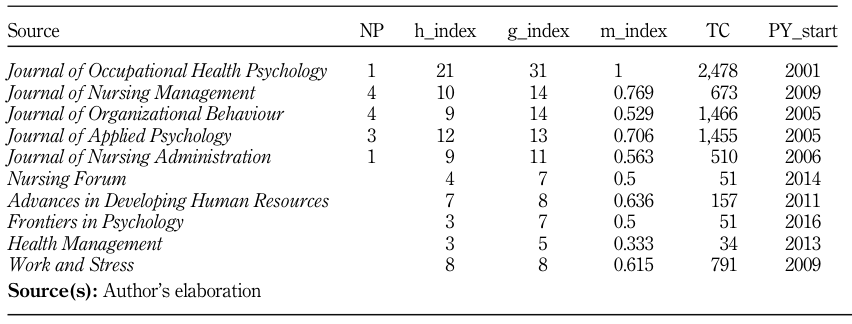
The third objective of the study is to analyse three aspects of the most relevant sources in terms of publication, source impact and source growth of the journal. Table 5 presents the publication of articles in the top 10 journals. To assess the impact of the journals, the author considered the total citations, the h index and the g index of the journals. Journal of Occupational Health Psychology has the maximum number of articles (31) where most of the articles relate to the impact of incivility on the well-being, health of employees in the organization, and we observed that it also has a higher frequency of citations (2,478), with h_ index 5 21 and g_index 5 31. Figure 5 represents the growth of different sources in terms of articles published. Since 2001, the Journal of Occupational Health Psychology has shown significant growth in the number of published articles. It indicates that most of researchers prefer to publish their studies in this journal, as it is the primary source of literature on WI. The International Journal of Contemporary Hospitality Management shows a decreasing
trend from 2009 to 2011, but after 2012, it shows a sharp increase in publications and has become the second most preferred journal by researchers.
3.6 Geographic origin
Table 6 details the different countries in which research papers are published. From the table, it can be inferred that the USA has the highest number of publications (690) dominated by articles that explore relationship of WI and other organization behaviours, distantly followed by Canada with 178 publications and then Australia (75). India stands in 10th position in terms of the production of articles. In terms of citations, the USA is again at the top with 4,633 citations, followed by Canada with 2,786 citations, Singapore with 522 and so on. The average citation rate of Singapore is the highest of the countries, with a score of 174, whereas Japan is in second place with 111 average article citations. It can be seen that although Singapore is in 8th position in terms of production of articles and Japan is nowhere in the top 10, still these countries have the highest average citations.
3.7 Keywords analysis
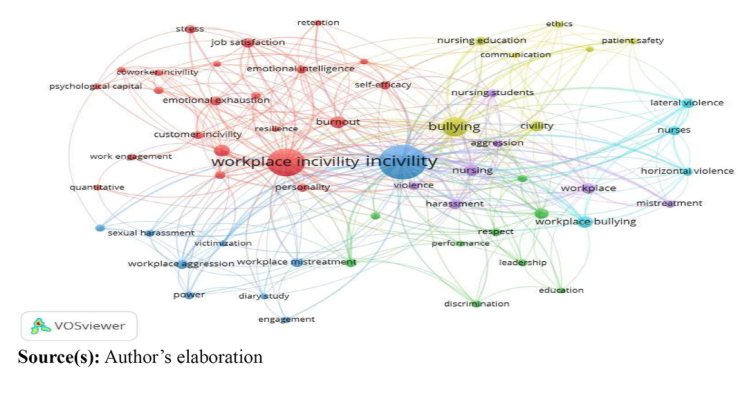
Figure 5 presents the co-occurrence of the keywords. The keyword analysis shows the topics on which the researchers have focussed within the given area. Based on the recommendations of Oraee et al. (2017) and Hosseini et al. (2018), the current study used author keyword and fractional counting in the VOSviewer. The figure shows the most frequently used words, including “workplace incivility,” “incivility” and “bullying.” The nodes’ colours indicate the different clusters of the keywords. It is seen that there three major clusters and that WI and bullying are strongly related to each other. Mainly the most important keywords clusters can be categorized into WI, incivility, bullying and burnout.
3.8 Three-field analysis
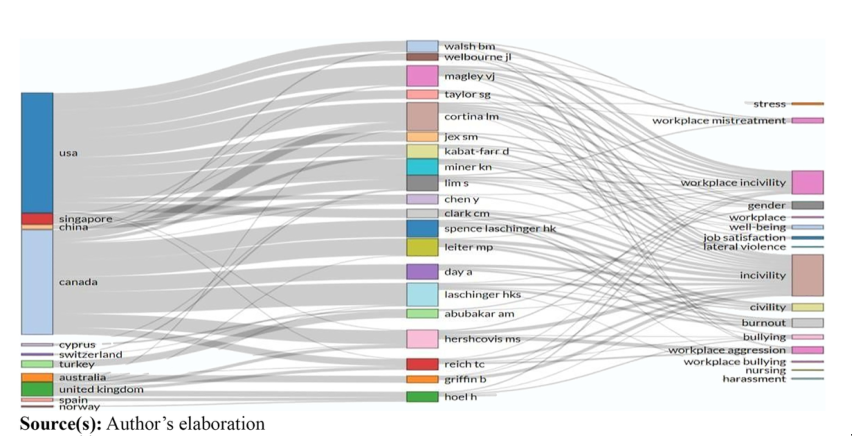
Figure 6 shows the three-plot analysis between authors, countries and keywords of WI publication. The figure depicts that the authors in the USA are publishing more in the domains of WI, lateral violence, workplace mistreatment and the consequences of incivility, namely, stress, burnout and job satisfaction. Furthermore, countries like Canada, the United Kingdom, Australia and Singapore have significant contributions based on bullying, workplace aggression, job satisfaction and harassment. The issue of WI is mainly studied in these countries. Cortina, from the USA, and Leiter and Laschinger, from Canada, are some of the authors who have contributed heavily to the literature on WI.
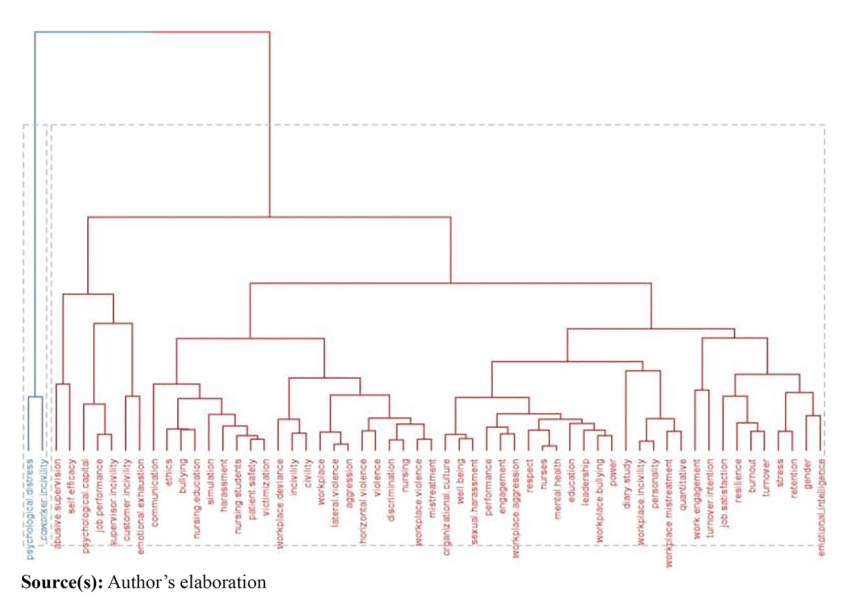
3.9 Topic dendrogram
Figure 7 is a topic dendrogram that shows the hierarchical relationship between the keywords having a hierarchical relationship between them. It allocates the objects to clusters. We can observe that the first cluster is about employees’ psychological distress and coworker incivility in the workplace. The second cluster focusses more on abusive supervision and the different types of behavioural outcomes of the employees, like job satisfaction, burnout, absenteeism, stress, performance and turnover intentions. The clusters also show the interrelations of negative behaviours of violence, aggression, discrimination on the employees’ well-being.
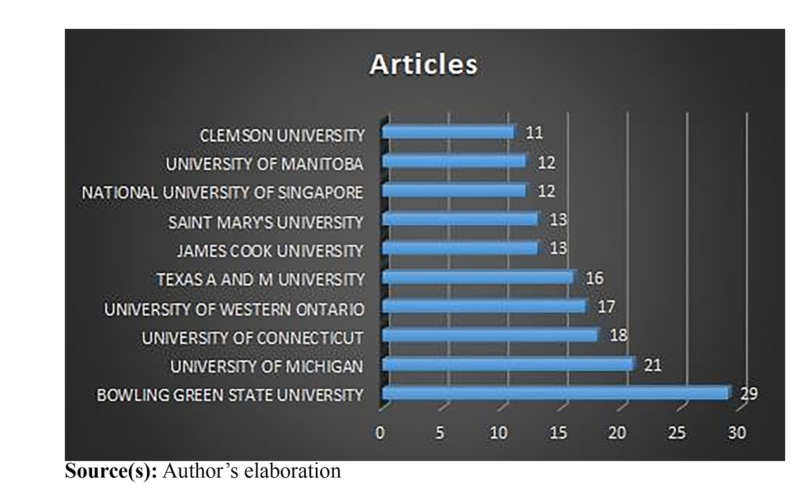
3.10 Relevant affiliation
Figure 8 show the top 10 most relevant affiliations. The Bowling Green State University has the highest number of articles (29) and contributed a strong basis for research on WI. The University of Michigan is the second among the top most relevant affiliations, with 21 publications. The University of Connecticut and the University of Western Ontario are at the third and fourth, with 18 and 17 publications, respectively. Texas A and M University is fifth with 16 publications.
3.11 Thematic map
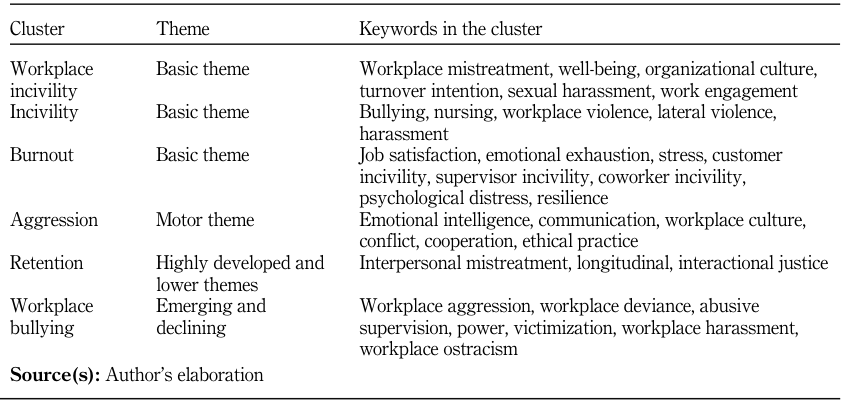
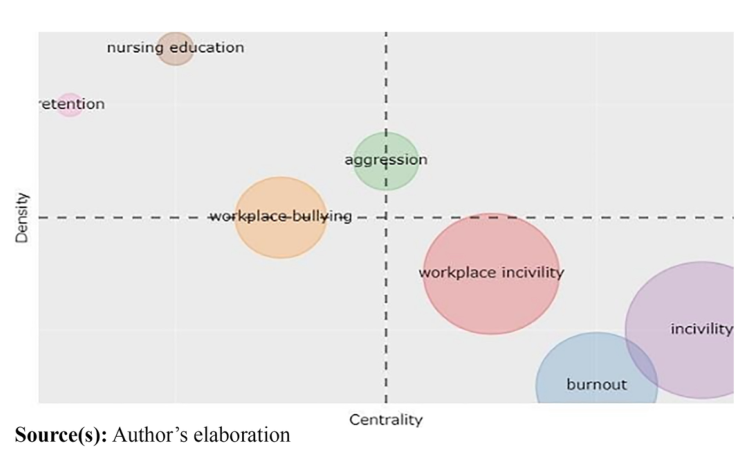
The study has identified several themes when interpreting the results. A thematic map was constructed using 200 keywords from the existing literature from 1999 to 2022. The items in the clusters were set to the minimum frequency of three. The biblioshiny software was adopted for this analysis. Figure 9 shows the thematic mapping based on the density, which is the y-axis, and centrality represented by the x-axis. Their thickness and importance by centrality measures the development of the themes. The figure is divided into four quarters. The first quarter in the upper right represents the themes that are high in density and centrality. These are called motor themes, which are essential and developed. Looking at the figure, we see that workplace bullying and aggression are partially in this quarter, and it is somewhat advanced and crucial. The second, lower right quarter is about the primary and transversal themes and represents low density but high centrality, which means much research has been done on these themes. Meanwhile, the figure depicts that researchers are interested in WI, incivility and burnout. The third part, which is lower left, shows the themes that are emerging or declining. Lastly, the upper left quadrant represents high-density and low-centrality themes. These themes are isolated but developed. Most of the existing literature focusses on WI and how such behaviour impacts employee retention. WI is particularly high in the nursing sector. Using the different clusters from Figure 9 and Table 6 has been constructed. The topics that come from the WI cluster, which is the first one under this, are well-being, organization culture, work engagement and turnover intention. The researchers are showing interest in these themes, and much work has been done in this field (Akbari, 2016). But when we see the country production table in India, there is significantly less research on WI. The second is aggression, which partially comes under motor themes, meaning that it is an essential and developed theme. The topics under this theme are emotional intelligence, workplace culture, conflict management and communication. Workplace bullying is an emerging and declining theme under which workplace aggression, abusive supervision, power, workplace deviance is some of the topics. If the researcher focusses on emerging themes, then, in the future, these themes can be converted into motor or basic themes.
3.12 Thematic evolution
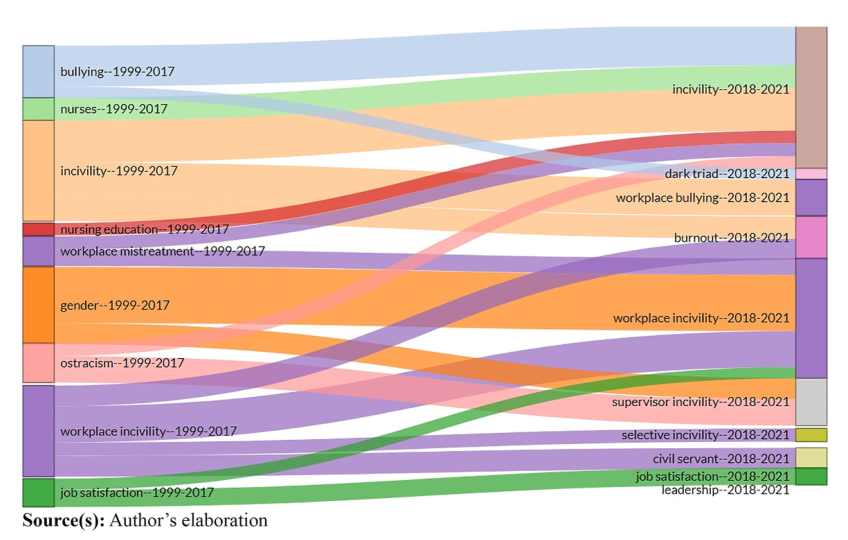
In addition, there is thematic evolution. Figure 10 illustrates the literature development on WI. Using the author keywords, the thematic evolution shows the history and evolution of the themes. The first segment about bullying, incivility, nursing education, workplace mistreatment and job satisfaction evolved from 1999 to 2017. Second, incivility, dark triad, workplace bullying, supervisor incivility and selective incivility were introduced during 2018–2021. Currently, the researcher focusses on counterproductive work behaviours and how such behaviours result in negative emotions and affect the employees’ job satisfaction.
4. Findings and discussion
Since its formalization as a research construct in 1999, WI has assumed a more prominent position in the scientific discourse, resulting in an exponential increase in its research output. WI is grievous because it is widely regarded as the “cancer” of the workplace, necessitating immediate and serious action. The findings show that extant research on the subject highlights the severity of the problem of WI across regions, industries and organizational typologies. This concept stemmed from 1999 but did not gain much interest in the early 2000s, as it initially appeared to be a secondary business matter (Santoro et al., 2018). However, from 2010 onwards, studies have been expanding progressively in size and numbers, as the true scale of the subject’s significance is becoming more obvious. Researchers around the globe are now paying serious attention to WI, and they study its effect on various areas of organizational behaviours. And there is still great scope and need for further research. Analysing the afore-described set of publications (see methodology), the trend analysis shows that 84 and 72 articles were published in 2019 and 2020, respectively, which is the highest of all years and was kick-started in 2021 with four publications in one month only. While in 2002, there was only one article published, but after 2009, it is seen that the number of articles has increased. The Journal of Applied Psychology and the Journal of Occupational Health Psychology produced the most articles in this domain, which are above 1,000. When it comes to citations, the Journal of Occupational Health Psychology tops the list with 2,478 citations. Moreover, according to the analysis, more than half of the total studies were conducted in the USA, Canada and Australia. This also shows that other countries have still not noticed the adverse effect of WI, despite it being a global issue. The present study has also found the relevant affiliations and that The Bowling Green State University has had the most contributions with 29 articles and has formed a strong basis for research on WI. The University of Michigan is the second among the top most relevant affiliations with 21 publications. This research also highlights that the majority of the research was conducted in the nursing sector. But there is a need to conduct more researches in other workplaces, like hotels, educational institutions and so on. Lastly, an assessment of keywords of studies revealed that “bullying,” “mistreatment” and “harassment” are among the most used words. This is because these terms are often used interchangeably although their implications and consequences are not quite the same (Hartley et al., 2016). “Burnout” and “retention” are also common keywords showing that WI has a major impact on burnout and employee retention. Also, over the last few years, open-access publishing has become a new trend in social sciences research in India, increasing the exposure of research output by Indian researchers. The findings demonstrate that the growth rate of these publications and their citations has been highly favourable and has been increasing during the study period. The papers have also been published in various national and international journals. Our review’s thematic analysis covers a range of theories and conceptual frameworks that reflect the stressful situations that employees encounter in a social setting (e.g. Hobfoll, 2001; Hur et al., 2015). No matter how the incivility of the superiors and coworkers manifests itself (e.g., through verbal aggression), it drains employees emotionally and results in several negative outcomes, such as employee burnout and intention to quit, which further impact employee behaviour, morale, service quality and job satisfaction of the staff. Since WI occurs in a social situation, it is very probable that other people may see it. Actually, it is very possible that more employees observe uncivil situations than actually experience them, given that incivility typically targets a specific individual. Thus, future study in the field of witnessing incivility may offer possibilities to advance our understanding of the effects of WI. The few studies that have looked into this type of WI have shown that it can lead to work withdrawal, emotional exhaustion and performance-related criteria. These findings highlight the importance of further research on this topic. Empirical research has recently begun to look into how rudeness at work affects relationships with people outside of the workplace. These research demonstrated that WI increases work-to-family friction in employees, which in turn lowers marital satisfaction in both employees and their partners. It would be fruitful to look at a wider range of thoughts, feelings and behaviours that targets of uncivil incidents and their partners may experience and engage in during their free time, according to the findings that experienced WI even influences the attitudes of both targets of incivility and their partners in the “home” domain. Given the high prevalence and high costs of WI, it is surprising that more studies focus on the consequences of workplace disrespect than on its causes. We think it’s critically to continue the investigation into the causes of WI so that we may learn more and create treatments and policies to lessen its prevalence. The mediation mechanism for why certain dispositional personality features would lead to higher degrees of experienced incivility was only partially explored by Milam et al. (2009); these investigators discovered that disagreeable and neurotic coworkers made them more provocative targets. Furthermore, future research may benefit from attempting to understand the causes of incivility’s potent reactions on witnesses given its substantial negative impacts.
5. Scholarly and executive implications
We have made significant strides in the past few years in understanding the frequency and effects of workplace disrespect. We now understand a wide range of effects for persons who are the targets of uncivil behaviour, in addition to some of the ramifications for those who only observe such confrontations. Additionally, researchers took the initial steps in researching the causes of encouraged WI or the reasons why people act uncivilly. The study, together with the SLR, uses bibliometric analysis, which is a novel methodological approach combining both quantitative and qualitative data. Therefore, it allowed us to advance our understanding of the consequences of WI on employee performance and beyond. In addition, it allowed us to systematize the existing literature around theoretical frameworks, conceptions and antecedents to WI. Second, the study shows the publication trends, thus enabling scholars in the field to shed light on the field of workplace deviant behaviour and, over time, to unveil the dark side of workplace. Third, the study reveals research gaps that are relevant to the WI conception, as well as the theories used to support relevant relationships between dependent and independent variables, the boundary conditions and underlying mechanisms. The culture of incivility is produced by managers and coworkers, according to previous studies. Academicians may get further understanding and close research gaps about incivility and its impact on employee productivity and well-being as a result of this study. To the best of the authors’ knowledge, none of the studies have included a comprehensive overview of the research trend on WI. As a result, this study presents a thorough examination of the most recent publication trends, varied themes and collaborative networks on WI. Furthermore, this research presents the thematic evolution of this research area, allowing an individual or researcher new to the subject to receive a bird’s-eye view of the key publications and how the research themes have advanced to date. In addition, scholars will have a better knowledge of bibliometric methods as a result of this research. The absence of an overarching or integrated theoretical framework is another notable aspect of the literature on workplace disrespect. The seminal paper on WI by Andersson and Pearson (1999) introduced the concept from a social interactionist perspective and framed the exchange of impolite behaviours as an interactive event to emphasize the importance of interpersonal and contextual factors. They wrote, “The instigator(s), the target(s), the observer(s), and the social context all contribute to and are affected by an uncivil encounter” (p. 457). However, empirical study has not yet adopted this social interactionist viewpoint. Instead, research generally concentrated on the causes and effects of months or years of encountered rudeness, and the corpus of work on witnessed and encouraged rudeness exploded without a theoretical framework or theoretical direction. That is to say, there isn’t yet a theoretical framework that guides and integrates the study on the causes, effects and antecedents of actual, observed and encouraged WI. Theoretically supported antecedents of workplace disrespect; uncivil encounter outcomes; and the affective, cognitive, attitudinal and behavioural processes that underlie these results were not suggested by researchers either. This report has important scholarly implications since it identifies previously unexplored areas of inquiry and offers new insights into present gaps on which future research efforts should be directed. To begin with, it says that the majority of research so far has focussed on certain work groups, such as nurses and hotel staff, while WI among groups such as flight attendants, researchers and academics still requires further investigation. Academics are being pushed to focus their research on these workplaces as a result of this void. Second, our findings point to the need for more research into the underlying causes of WI, as the study reveals that most studies have focussed on the consequences of WI, with little attention paid to the causes and approaches to eliminate incivility from the workplace.
Also, given the significant number of research on WI that have been undertaken, we think there was an urgent need for an integrated evaluation of the topic right now. Thus, our article provides a guided pathway to researches to use existing literature as foundation to fill gaps. Our findings have managerial ramifications as well. The research could be an excellent starting point for future policy interventions aimed at giving zero tolerance to uncivil behaviour. This study’s keyword analysis outlines the words related with incivility, such as burnout, turnover, hostility and bullying. As a result of the keywords, it can be deduced that incivility is not innocuous but has a significant impact on employee behaviour. Employees develop a bad and counterproductive mindset as a result of incivility. Employees can participate in psychological training programs, and there could be an employee conduct manual on how to behave in the workplace.
6. Conclusions
Employees’ relationships and modes of behaviour towards each other play crucial roles in maintaining peace and harmony in the workplace. The review’s thematic analysis has identified a number of theories and frameworks that reflect the stressful situations that employees encounter in a social setting (e.g. Hobfoll, 2001; Hur et al., 2015). Employees are emotionally exhausted by WI, regardless of how it is expressed (e.g. customer verbal aggression), and this leads to a variety of negative outcomes including employee burnout and intention to quit; surface acting and chain reactions; and subsequent effects on employee behaviour, morale, service performance and job satisfaction. Although incivility is mild counterproductive behaviour, unlike bullying, it still has an eminent negative impact on individuals’ mental and physical health, which in turn impacts their work. Therefore, it is very important to identify and rectify uncivil behaviour in the organizations (Wells et al., 2020). However, analysis of the existing literature has exposed that research is still scant and incomplete, especially in relation to Asia. We hope and trust that our research effectively delineates and explicates the subject, and that it successfully highlights the imperative of eliminating WI from and towards coworkers and supervisors. Finally, we hope that it inspires both academics and practitioners to fill the existing research gaps we identified, to constructively develop existing literature vertically (to greater focus/depth) and horizontally (to expand the research spectrum and achieve generalizability) and to develop theoretical frameworks, strategies and effective mechanisms that will practically and essentially manage incivility at work, thus ensuring employees’ protection and well-being, as well as improving organizational environments for business success. With significant negative affective, cognitive and behavioural repercussions for its targets, bystanders and instigators, WI is a costly and ubiquitous behaviour. Additionally, it has been identified as a contemporary way that sexism and racism can appear in organizations. Therefore, it is crucial to keep up research initiatives that aim to further our understanding of workplace disrespect and could aid in the prevention of this destructive behaviour in all of its manifestations. Given the harmful effects and high prevalence of WI, we hope that this review article will encourage researchers to continue studying this problematic workplace phenomenon as well as practitioners to develop strategies and policies to lessen the incidence and effects of experienced, observed and instigated WI. We summarized and included the research on workplace disrespect, an area of study that has drawn a growing degree of interest from academics in the field of organizational behaviour, in this narrative review paper. We attempted to organize an area of study that is now dispersed and might have been harder to access. This survey of the literature on WI is intended to point the way for future theoretically motivated studies on the causes, mechanisms and effects of seen, experienced and initiated WI.
Further, it would be interesting to understand how incidents of incivility unfold in the minds of witnesses and the impact that such incidents exert on witnesses. Another important takeaway is the lack of cross-cultural and sectoral studies on WI, which, if conducted, would make a considerable contribution to the knowledge structure of WI. We hope that the quantitative and qualitative insights generated will contribute to the epistemological discourse on WI and enable researchers working in this field to further the research agenda on this topic while also encouraging practitioners to take measures and formulate firm policies aiming to curtail and prevent this behaviour in their respective workplaces. We also believe that this review of WI literature will provide directions for future theory-driven research on the antecedents, processes and outcomes of experienced, witnessed and instigated WI.
7. Limitations and future research avenues
As for most academic research, the present study is not without limitations, which need to be considered by subsequent works on the subject. First, while the bibliometric analysis performed with network tools is objective, the subsequent interpretation of the data does, inevitably, bear a degree of subjectivity. By nature, the subject and findings are such that they are affected by perceptions and interpretations that cannot, de facto, be pure in their objectivity. Second, we conducted a bibliometric analysis on WI using 471 research papers from 1999 to 2022 that were culled from Scopus databases. Although we believe that the study sample accurately represented the available literature on WI, future research may increase the inclusion criteria, while conducting further research on the topic. Similarly, other researchers may be able to identify relevant research by using different keywords in their search approach to find any relevant material we may have overlooked (Vrontis and Christofi, 2019). Third, the investigation used a narrow date range in the Scopus database. The boundaries specified during the data collecting process determine how methods are resolved (Dzikowski, 2018). Although Scopus is one of the most well-known databases, it contains only a part of the available data. Certain journals published on a global scale are not indexed in Scopus (e.g. Ivey Business Journal and Journal of Management Development). And although there have been no significant changes in the networks, technical considerations may have slightly influenced the outcomes. Other available data sources, such as Web of Science, ISI and Google Scholar, and ranking systems, such as ABDC and ABS, can be used to extend or confirm the trends. Also, due to the fact that VOSviewer only supports the use of bibliographic data from a single database, not a combination of databases, combining databases such as WoS and Scopus was not possible for this study. However, there is high degree of overlap among databases, and we recommend conducting future bibliometric analyses on a combination of datasets. Additionally, this study considered incivility in an array of workplaces and did not segment this literature into distinct sectors. Nevertheless, future researchers can perform their bibliometric analyses on the literature relevant to a particular sector, such as hospitality, academic incivility and so on. The research also showed scholarly collaborative networks and networks among nations. Future research can examine several types of interactions in greater depth, such as advisor–student relationships and the scholar’s experience and education. Scholars may use ideas and theoretical frameworks from a variety of disciplines to explain the antecedents, consequences of incivility and most importantly the ways to eliminate WI as SLR show a major gap in literature wen its comes to researches about the measures that an organization should employ to avoid incivility to take a toll on them. These arguments can also be researched in cross-cultural studies in various nations or industries to clarify the significance of different organizational and individual characteristics
like culture, attitudes, perceptions, organizational structures and design, as well as demographic traits like educational background, gender and age. The thematic mapping shows that much work has been done on WI and turnover intentions. Thus, future researches may conduct a systematic literature review and bibliometric analysis on how WI affects turnover intentions. Some of the questions that arise as being likely valuable for future researches to focus on are as follows:
Q1. How does WI affect the other organizational behaviours, such as knowledge hiding and innovative work behaviour?
Q2. What are the factors that mediate and moderate WI and other counterproductive behaviours, for example, work withdrawal behaviour?
Q3. Which are the antecedents of WI?
Q4. What might constitute remedial steps to reduce uncivil behaviour of employees?
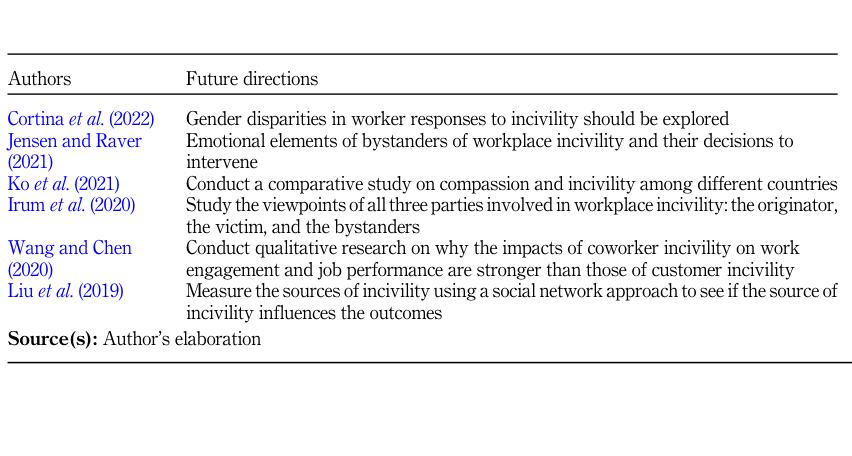
A few other key future directions drawn from the literature are presented in Table 7.
References
Akbari, M., Abdolvand, M. and Ghaffari, F. (2016), “Developing a model in antecedents of consumer misbehaviour on chain stores”, Behaviour Revista Brasileira De Marketing, Vol. 15 No. 2, pp. 146-164.
Andersson, L.M. and Pearson, C.M. (1999), “Tit for tat? The spiraling effect of incivility in the workplace”, Academy of Management Review, Vol. 24 No. 3, pp. 452-471.
Aria, M. and Cuccurullo, C. (2017), “Bibliometrix: an R-tool for comprehensive science mapping analysis”, Journal of Informetrics, Vol. 11 No. 4, pp. 959-975.
Burnfield, J.L., Clark, O.L., Devendorf, S.A. and Jex, S.M. (2004), “Understanding workplace incivility: scale development and validation”, 19th Annual Conference of the Society for Industrial and Organizational Psychology, Chicago.
Carter, S. (1998), Civility: Manners, Morals, and the Etiquette of Democracy, Basic Books, New York.
Cha, C. and Sung, C. (2020), “Factors related to nursing performance in South Korean intensive care units”, International Journal of Nursing Practice, Vol. 26 No. 6, e12874.
Chatterjee, S., Chaudhuri, R., Thrassou, A. and Vrontis, D. (2021), “Antecedents and consequences of knowledge hiding: the moderating role of knowledge hiders and knowledge seekers in organizations”, Journal of Business Research, Vol. 128, pp. 303-313.
Chaudhuri, R., Chavan, G., Vadalkar, S., Vrontis, D. and Pereira, V. (2020), “Two-decade bibliometricoverview of publications in the journal of knowledge management”, Journal of Knowledge Management, Vol. 25 No. 6, pp. 1550-1574, doi: 10.1108/JKM-07-2020-0571.
Cortina, L.M., Magley, V.J., Williams, J.H. and Langhout, R.D. (2001), “Incivility in the workplace: incidence and impact”, Journal of Occupational Health Psychology, Vol. 6 No. 1, pp. 64-80.
Cortina, L.M., Hershcovis, M.S. and Clancy, K.B. (2022), “The embodiment of insult: a theory of biobehavioural response to workplace incivility”, Journal of Management, Vol. 48 No. 3, pp. 738-763.
De Castro, B.O., Veerman, J.W., Koops, W., Bosch, J.D. and Monshouwer, H.J. (2002), “Hostile attribution of intent and aggressive behaviour: a meta-analysis”, Child Development, Vol. 73 No. 3, pp. 916-934.
Dzikowski, P. (2018), “A bibliometric analysis of born global firms”, Journal of Business Research, Vol. 85, pp. 281-294.
Guidroz, A.M., Burnfield-Geimer, J.L., Clark, O., Schwetschenau, H.M. and Jex, S.M. (2010), “The nursing incivility scale: development and validation of an occupation-specific measure”, Journal of Nursing Measurement, Vol. 18 No. 3, pp. 176-200.
Gültaç, A.S. (2019), “Örgütsel sapma ve nezaketsizlik davranışları ilişkisinde işyerinde dışlanmanın aracı rolü: sağlık kurumlarında bir araştırma”.
Guo, J. and Qiu, Y. (2019), “Workplace incivility and organisational identification: the role of affective organisational commitment and perceived insider status”, Journal of Psychology in Africa, Vol. 29 No. 5, pp. 452-459.
Handoyo, S., Samian, D.S. and Suhariadi, F. (2018), “The measurement of workplace incivility in Indonesia: evidence and construct validity”, Psychology Research and Behaviour Management, Vol. 2018 No. 11, pp. 217-226.
Hartley, S., Jovanoska, J., Roberts, S., Burden, N. and Berry, K. (2016), “Case formulation in clinical practice: associations with psychological mindedness, attachment and burnout in staff working with people experiencing psychosis”, Psychology and Psychotherapy: Theory, Research and Practice, Vol. 89 No. 2, pp. 133-147.
Hobfoll, S.E. (2001), “The influence of culture, community, and the nested-self in the stress process: advancing conservation of resources theory”, Applied Psychology, Vol. 50 No. 3, pp. 337-421.
Hosseini, M.R., Martek, I., Zavadskas, E.K., Aibinu, A.A., Arashpour, M. and Chileshe, N. (2018), “Critical evaluation of off-site construction research: a scientometric analysis”, Automation in Construction, Vol. 87, pp. 235-247.
Hur, W.M., Moon, T.W. and Han, S.J. (2015), “The effect of customer incivility on service employees’ customer orientation through double-mediation of surface acting and emotional exhaustion”, Journal of Service Theory and Practice, Vol. 25, pp. 394-413.
Irum, A., Ghosh, K. and Pandey, A. (2020), “Workplace incivility and knowledge hiding: a research agenda”, Benchmarking: An International Journal, Vol. 27 No. 3, pp. 958-980.
Itzkovich, Y. (2016), “The impact of employees’ status on incivility, deviant behaviour and job insecurity”, EuroMed Journal of Business, Vol. 11 No. 2, pp. 304-318.
Jensen, J.M. and Raver, J.L. (2021), “A policy capturing investigation of bystander decisions to intervene against workplace incivility”, Journal of Business and Psychology, Vol. 36 No. 5, pp. 883-901.
Ko, S.H., Kim, J. and Choi, Y. (2021), “Compassion and workplace incivility: implications for open innovation”, Journal of Open Innovation: Technology, Market, and Complexity, Vol. 7 No. 1, e95.
Leiter, M.P., Laschinger, H.K.S., Day, A. and Oore, D.G. (2011), “The impact of civility interventions on employee social behaviour, distress, and attitudes”, Journal of Applied Psychology, Vol. 96 No. 6, e1258.
Liu, W., Zhou, Z.E. and Che, X.X. (2019), “Effect of workplace incivility on OCB through burnout: the moderating role of affective commitment”, Journal of Business and Psychology, Vol. 34 No. 5, pp. 657-669.
Maddineshat, M., Oshvandi, K., Sadati, A.K., Rosenstein, A.H., Moayed, M.S. and Khatiban, M. (2021), “Nurses’ perception of disruptive behaviours in emergency department healthcare teams: a qualitative study”, International Emergency Nursing, Vol. 55, e100962, doi: 10.1016/j.ienj.2020.100962.
Martin, R.J. and Hine, D.W. (2005), “Development and validation of the uncivil workplace behaviour questionnaire”, Journal of Occupational Health Psychology, Vol. 10 No. 4, pp. 477-490.
Milam, A.C., Spitzmueller, C. and Penney, L.M. (2009), “Investigating individual differences among targets of workplace incivility”, Journal of Occupational Health Psychology, Vol. 14 No. 1, pp. 58-69.
Miner, K.N., Diaz, I. and Rinn, A.N. (2017), “Incivility, psychological distress, and math self- concept among women and students of color in STEM”, Journal of Women and Minorities in Science and Engineering, Vol. 23 No. 3, pp. 211-230.
Miranda, G.A., Welbourne, J.L. and Sariol, A.M. (2020), “Feeling shame and guilt when observing workplace incivility: elicitors and behavioural responses”, Human Resource Development Quarterly, Vol. 31 No. 4e, pp. 371-392.
Oakleaf, M. (2009), “The information literacy instruction assessment cycle”, Journal of Documentation, Vol. 26 No. 4, pp. 539-560.
Oraee, M., Hosseini, M.R., Papadonikolaki, E., Palliyaguru, R. and Arashpour, M. (2017), “Collaboration in BIM-based construction networks: a bibliometric-qualitative literature review”, International Journal of Project Management, Vol. 35 No. 7, pp. 1288-1301.
Padrós-Cuxart, R., Riera-Quintero, C. and March-Mir, F. (2016), “Bibliometrics: a publication analysis tool”, Proceedings of the BIR@ECIR Padova, pp. 44-53, 20 March 2016.
Park, L.S., Martinez, L. and Xu, S. (2022), “Job experience as a buffer against incivility: a daily diary study”, Journal of Managerial Psychology, Vol. 37 No. 3, pp. 243-263.
Pritchard, A. (1969), “Statistical bibliography or bibliometrics”, Journal of Documentation, Vol. 25 No. 4, pp. 348-349.
Raza, M.A., Ul-Hadi, N., Khan, M. and Mujtaba, B.G. (2020), “Empirical evidence of organizational justice and incivility in the tourism industry: assessing the moderating role of Islamic work ethics and trust in leader”, Journal of Transnational Management, Vol. 25 No. 4, pp. 274-299.
Santoro, G., Vrontis, D., Thrassou, A. and Dezi, L. (2018), “The Internet of Things: building a knowledge management system for open innovation and knowledge management capacity”, Technological Forecasting and Social Change, Vol. 136, pp. 347-354, doi: 10.1016/j.techfore.2017.02.034.
Schilpzand, P., De Pater, I.E. and Erez, A. (2016), “Workplace incivility: a review of the literature and agenda for future research”, Journal of Organizational Behaviour, Vol. 37, pp. S57-S88.
Serravalle, F., Ferraris, A., Vrontis, D., Thrassou, A. and Christofi, M. (2019), “Augmented reality in the tourism industry: a multi-stakeholder analysis of museums”, Tourism Management Perspectives, Vol. 32, 100549.
Taşkaya, S. and Aksoy, A. (2020), “A bibliometric analysis of workplace incivility in nursing”, Journal of Nursing Management, Vol. 29 No. 3, pp. 518-525.
Themistocleous, C. (2018), “Customer data: contemporary issues of privacy and trust”, in Vrontis, D., Weber, Y., Thrassou, A., Shams, S. and Tsoukatos, E. (Eds), Innovation and Capacity Building, Palgrave Macmillan, Cham, pp. 167-185.
Tsuno, K., Kawakami, N., Shimazu, A., Shimada, K., Inoue, A. and Leiter, M.P. (2017), “Workplace incivility in Japan: reliability and validity of the Japanese version of the modified work incivility scale”, Journal of Occupational Health, Vol. 59 No. 3, pp. 237-246.
Vrontis, D. and Christofi, M. (2019), “R&D internationalization and innovation: a systematic review, integrative framework and future research directions”, Journal of Business Research, Vol. 128, pp. 812-823.
Wang, C.H. and Chen, H.T. (2020), “Relationships among workplace incivility, work engagement and job performance”, Journal of Hospitality and Tourism Insights, Vol. 3 No. 4, pp. 415-429.
Wells, J.E., Sartore-Baldwin, M., Walker, N.A. and Gray, C.E. (2020), “Stigma consciousness and work outcomes of senior woman administrators: the role of workplace incivility”, Journal of Sport Management, Vol. 35 No. 1, pp. 69-80.
Wilson, N.L. and Holmvall, C.M. (2013), “The development and validation of the incivility from customers scale”, Journal of Occupational Health Psychology, Vol. 18 No. 3, pp. 310-326.
Yao, J., Lim, S., Guo, C.Y., Ou, A.Y. and Ng, J.W.X. (2022), “Experienced incivility in the workplace: a meta-analytical review of its construct validity and nomological network”, Journal of Applied Psychology, Vol. 107 No. 2, pp. 193-220.
Young, K.A., Hassan, S. and Hatmaker, D.M. (2021), “Towards understanding workplace incivility: gender, ethical leadership and personal control”, Public Management Review, Vol. 23 No. 1, pp. 31-52.
Zhou, Z.E., Meier, L.L. and Spector, P.E. (2019), “The spillover effects of coworker, supervisor, and outsider workplace incivility on work-to-family conflict: a weekly diary design”, Journal of Organizational Behaviour, Vol. 40 Nos 9-10, pp. 1000-1012.
Further reading
Kim, H. and Qu, H. (2019a), “Employees’ burnout and emotional intelligence as mediator and moderator in the negative spiral of incivility”, International Journal of Contemporary Hospitality Management, Vol. 31 No. 3, pp. 1412-1431, doi: 10.1108/IJCHM-12-2017-0794.
Kim, H. and Qu, H. (2019b), “The effects of experienced customer incivility on employees’ behavior toward customers and coworkers”, Journal of Hospitality and Tourism Research, Vol. 43 No. 1, pp. 58-77, doi: 10.1177/1096348018764583.